Mila & PolArctic Deploy PINNs for Arctic Sea Ice AI

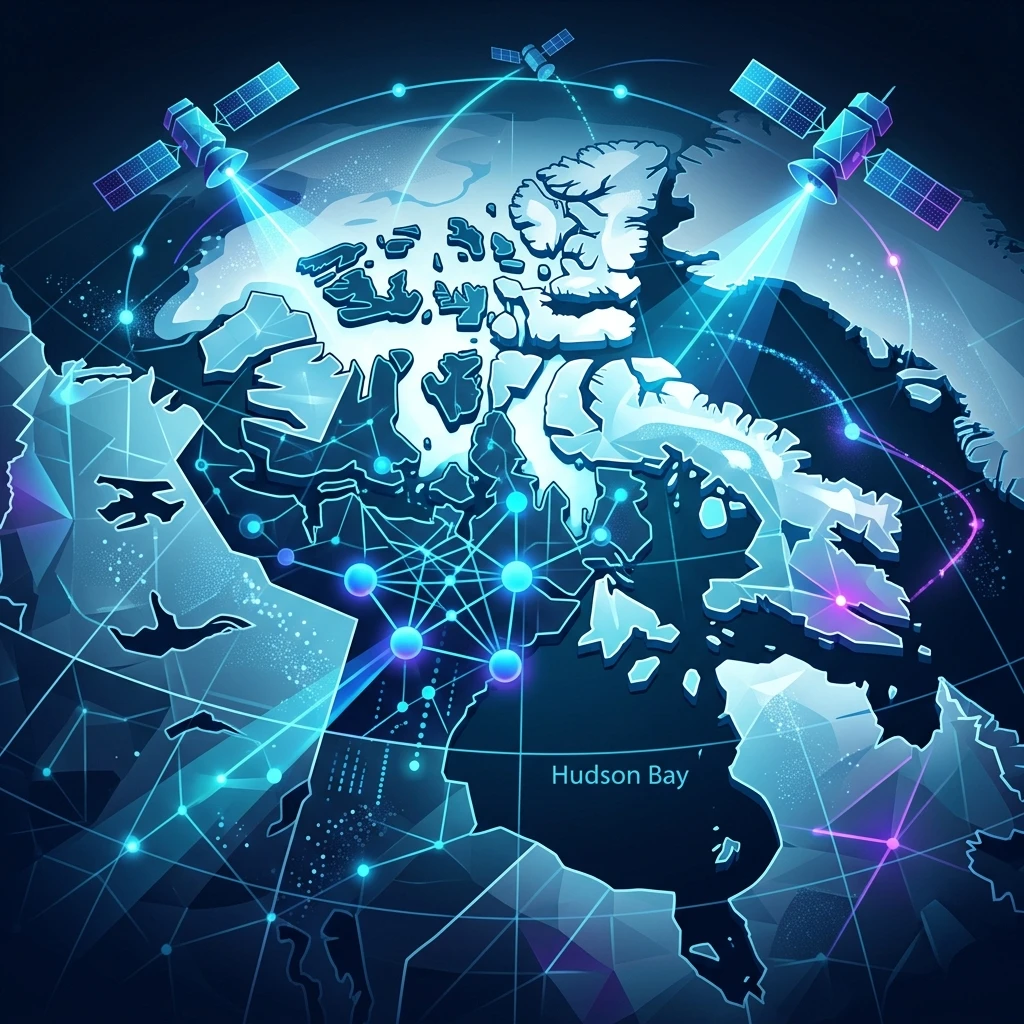
Predicting sea ice dynamics across the Canadian Arctic has historically been hindered by sparse sensory coverage and unpredictable microclimates, threatening northern maritime navigation and community safety. Traditional thermodynamic models struggle to process satellite telemetry in real time, while standard pure-data machine learning algorithms often violate fundamental laws of fluid dynamics when oceanographic data is incomplete.
At the 2026 Indigenous AI Gathering in Montreal, Mila – Québec Artificial Intelligence Institute and Halifax-based climate tech firm PolArctic Canada announced a landmark partnership to deploy Physics-Informed Neural Networks (PINNs) and high-resolution digital twins for Arctic sea ice forecasting.
Key Takeaways
- Architectural Synergy: Combines Physics-Informed Neural Networks (PINNs) with Generative Adversarial Networks (GANs) and satellite telemetry to enforce thermodynamic constraints during model training.
- Indigenous Knowledge Integration: Fuses traditional Inuit sea ice observation methods with deep learning to capture localized ice mechanics often missed by orbital sensors.
- Sovereign Infrastructure: Aligns directly with Canada’s National AI Strategy to establish autonomous, Canadian-owned climate intelligence platforms for northern sovereignty.
- Operational Precision: Delivers high-frequency, sub-kilometer sea ice condition forecasts for northern shipping, maritime search and rescue, and coastal community planning.
The Bottleneck in Polar Climate Modeling
Conventional Earth observation models rely on satellite synthetic aperture radar (SAR) and sea surface temperature metrics. However, polar cloud cover, ice deformation, and multi-year ice melt create severe data sparsity. When pure deep learning models attempt to fill these gaps, they frequently generate unphysical predictions—such as sea ice forming rapidly in above-freezing waters.
This risk is unacceptable for Arctic maritime operators, fisheries, and Indigenous communities relying on ice highways. Building on recent foundational research presented in Mila’s ICML 2026 breakthroughs, the new joint framework embedding physical conservation laws directly into neural network loss functions ensures that outputs remain strictly bound by fluid thermodynamics and ocean physics.
Physics-Informed Neural Networks (PINNs) Meets Satellite Telemetry
PolArctic Canada, led by Indigenous tech founder Leslie Canavera, has developed specialized digital twins of the Arctic Ocean. The joint architecture integrates three primary technical components:
1. Thermodynamic Loss Enforcement
By embedding Navier-Stokes fluid equations and thermodynamic enthalpy constraints into the neural loss function, PINNs prevent unrealistic ice thickness and boundary drift even when satellite coverage is obstructed.
2. Multi-Spectral Remote Sensing
Convolutional neural networks (CNNs) process multi-band optical, thermal, and microwave satellite telemetry, extracting ice roughness, age, and fracturing metrics at sub-kilometer resolution.
3. Inuit Knowledge Synthesis
The model incorporates centuries of localized ice observation data collected by Inuit elders and hunters. This qualitative ecological knowledge provides critical ground-truth data regarding shorefast ice stability and seasonal thawing indicators that orbital radar cannot detect.
+-------------------------------------------------------------------+
|                  Canadian Arctic Climate AI Pipeline              |
+-------------------------------------------------------------------+
|  Satellite SAR / Optical  |  Thermodynamic Hydrodynamics (PINNs)  |
|  Traditional Inuit Knowledge |  Oceanographic Buoy Sensor Data    |
+-------------------------------------------------------------------+
                                  |
                                  v
+-------------------------------------------------------------------+
|               Mila x PolArctic Physics-Informed Engine            |
+-------------------------------------------------------------------+
                                  |
                                  v
+-------------------------------------------------------------------+
| High-Resolution Sea Ice Digital Twin & Maritime Safety Radar      |
+-------------------------------------------------------------------+
Advancing Sovereign Canadian AI Capability
This initiative represents a pivotal shift in how Canadian research institutions commercialize specialized AI models. Supported in part through national compute and talent frameworks like the Canada CIFAR AI Chairs expansion, the partnership demonstrates how public research funding translates into localized, domain-specific AI solutions.
By maintaining data ownership and model hosting within Canadian borders, PolArctic and Mila ensure that critical infrastructure intelligence remains under domestic governance.
Next Steps for Enterprise and Climate Developers
The deployment of physics-informed climate models opens significant opportunities for enterprise developers, logistics providers, and marine tech firms operating in polar environments. As climate volatility increases across the Northwest Passage, relying on generalized global models is no longer sufficient.
Organizations seeking to implement physical-informed architectures or climate risk models should evaluate:
- Embedding physical domain differential equations into neural network loss terms to solve sparse data challenges.
- Combining qualitative domain expertise with quantitative telemetry to ground model predictions.
- Leveraging sovereign compute infrastructure to maintain regulatory and operational compliance across critical assets.