Gemini Service Tiers: Priority, Flex, & Context Caching
// Dossier Executive Lead
Google launches Priority and Flex inference tiers alongside 95% implicit context caching discounts to optimize enterprise AI latency and token economics.
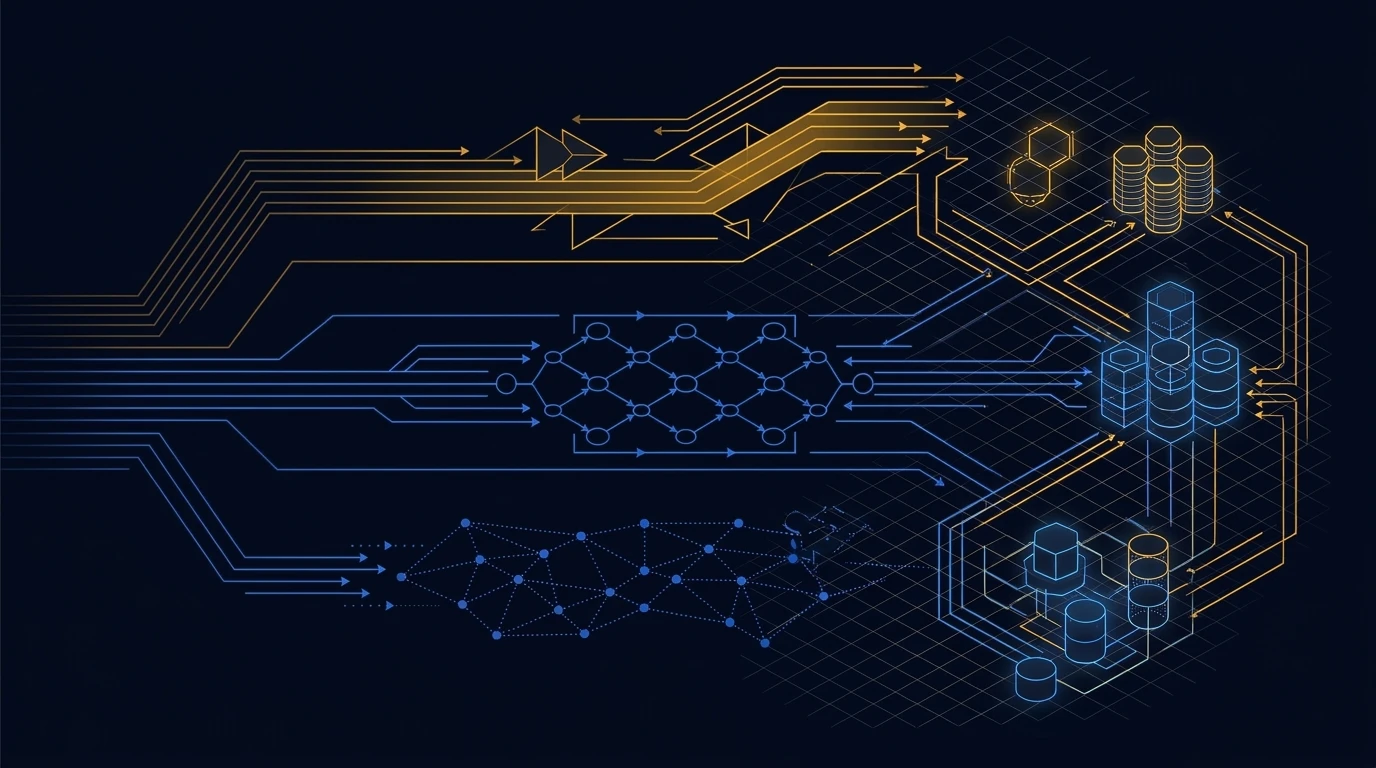
Enterprise infrastructure teams running multi-agent reasoning pipelines face an acute architectural tension: real-time, user-facing agentic interfaces demand deterministic sub-second latency, while background repository migrations, statutory document analysis, and autonomous evaluation sweeps consume millions of tokens where cost optimization matters far more than instant execution. To address this bifurcation, Google DeepMind and Google Cloud have unified their production infrastructure around explicit Gemini API Service Tiers and hardware-accelerated Context Caching mechanisms. By formalizing synchronous priority and flex compute pipelines alongside implicit Key-Value (KV) attention caching, the Gemini runtime provides enterprise architects with granular programmatic controls over Time to First Token (TTFT) latency, compute preemption policies, and unit economics across the Gemini 4 Argon and Gemini 3.8 model families.
Key Takeaways
- Deterministic Priority Routing: Routes latency-critical requests to non-sheddable TPU compute queues, achieving sub-second TTFT at a 75% to 100% price premium over standard API rates, guarded by automated graceful server-side downgrades rather than disruptive HTTP 429 rate-limit errors.
- Sheddable Flex Infrastructure: Introduces a 50% discount on standard API token pricing via Gemini Flex Inference, utilizing off-peak datacenter capacity for asynchronous multi-step agent loops that tolerate variable completion windows (1 to 15 minute target SLA).
- 95% Input Context Caching Discounts: Implicit context caching automatically inspects common prompt prefixes across Gemini 2.5 and newer models, cutting cached input token costs from $2.00 down to $0.10 per 1M tokens on Gemini 4 Argon without recurring storage fees.
- Header-Level Telemetry Auditing: Every completion emits the
x-gemini-service-tierHTTP response header, allowing API gateways, enterprise reverse proxies, and cost-attribution pipelines to programmatically detect tier fallbacks and verify SLA compliance in real time.
Architectural Analysis: Tiered Queuing & Hardware KV Caching
Deploying frontier language models across large-scale enterprise environments historically enforced a uniform “one-size-fits-all” queuing abstraction. Every API call competed for the same GPU/TPU cluster pools, forcing organizations to over-provision capacity for interactive customer tools while overpaying for background offline workloads.
The Gemini tiered execution architecture introduces a multi-lane dispatch fabric directly on Google Cloud TPU v5e and TPU v5p infrastructure. The architecture separates requests into four distinct operational classes: priority, standard, flex, and batch.
[ Enterprise Client Gateway ] (VPC / On-Premise Gateway)
            │
            ▼ (Interactions API / REST / gRPC)
+─────────────────────────────────────────────────────────────────────────+
|               Google Gemini Dynamic Dispatch Router                     |
|                                                                         |
|   ┌───────────────────────┐   Dynamic Saturation    ┌───────────────┐   |
|   │     Priority Lane     │ ──────────────────────► │ Standard Lane │   |
|   │ (Non-Sheddable TPU)   │   Graceful Fallback     │ (Base Quota)  │   |
|   └───────────┬───────────┘                         └───────┬───────┘   |
|               │                                             │           |
|               │         ┌───────────────────────┐           │           |
|               │         │       Flex Lane       │           │           |
|               │         │  (Sheddable Capacity) │           │           |
|               │         └───────────┬───────────┘           │           |
+───────────────┼─────────────────────┼───────────────────────┼───────────+
                │                     │                       │
                ▼                     ▼                       ▼
+─────────────────────────────────────────────────────────────────────────+
|               Cloud TPU v5e / v5p Accelerator Pods                      |
|                                                                         |
|   ┌─────────────────────────────────────────────────────────────────┐   |
|   │             Persistent High-Bandwidth KV Cache Layer            │   |
|   │   - Implicit Prompt Prefix Index (2,048+ Shared Tokens)         │   |
|   │   - Prefill Phase Elimination (Near-Zero Latency Resume)        │   |
|   │   - 95% Input Token Fee Amortization ($0.10 / 1M Tokens)        │   |
|   └─────────────────────────────────────────────────────────────────┘   |
|                                     │                                   |
|                                     ▼                                   |
|   ┌─────────────────────────────────────────────────────────────────┐   |
|   │       Transformer Decode Core (Argon 1M Window / Flash 3.8)     │   |
|   └─────────────────────────────────────────────────────────────────┘   |
+─────────────────────────────────────────────────────────────────────────+
            │
            ▼ (HTTP Response + 'x-gemini-service-tier: priority')
[ Enterprise Reverse Proxy & Routing Control Plane ]
The Graceful Downgrade Mechanism
In traditional cloud inference architectures, exceeding dedicated rate limits yields immediate failure modes: HTTP 429 (Too Many Requests) or HTTP 503 (Service Unavailable). For enterprise customer service copilots or mission-critical triage bots, dropping traffic during unexpected load spikes degrades user experience.
Under the Gemini Priority tier, rate limits are provisioned at 0.3x of standard interactive limits to preserve cluster headroom. When traffic surges push local cluster pools beyond instantaneous priority capacity, the inference dispatcher does not drop requests. Instead, it executes an automated server-side downgrade to the Standard tier. Downgraded requests are billed at standard base rates rather than the priority premium, and the client receives x-gemini-service-tier: standard in the response headers. This allows upstream routing layers in an enterprise agentic control plane to record the telemetry delta without terminating customer transactions.
Implicit vs. Explicit Context Caching
The second structural pillar of Gemini inference economics is hardware-resident context caching. In standard transformer execution, processing a 500,000-token prompt requires a resource-intensive prefill phase, computing the Key-Value projection matrices across every attention layer before the first output token can decode.
Gemini resolves this prefill bottleneck through two distinct operational models:
- Implicit Context Caching: Enabled automatically across Gemini 2.5, 3.x, and 4 generations for prompts exceeding common prefix thresholds (typically 2,048 tokens). If subsequent requests share identical prefixes—such as corporate compliance policies, large codebase ASTs, or multi-turn agent tool definitions—the TPU cluster retrieves the pre-computed KV activation states directly from high-bandwidth memory. Input tokens served from the cache receive a 95% pricing reduction ($0.10 per 1M tokens on Gemini 4 Argon) with zero persistent holding fees.
- Explicit Context Caching: Designed for programmatic control where engineering teams explicitly construct cache objects with defined Time-To-Live (TTL) durations. While explicit caching incurs a per-hour memory retention fee, it guarantees cache residency during high-frequency evaluation loops and interactive coding sessions across enterprise developer IDEs.
Benchmark Breakdown: Service Tier Performance & Latency Matrix
Evaluating tiered inference requires mapping time-to-first-token (TTFT) latency, preemption resilience, and token expenditures across diverse enterprise workloads. The matrix below contrasts operational telemetry across Google’s four service tiers:
| Architectural Metric | Priority Tier | Standard Tier | Flex Tier | Batch API |
|---|---|---|---|---|
| Target Latency (TTFT) | Sub-second (500ms – 1.2s) | Standard (1.5s – 3.5s) | Minutes (1m – 15m target) | Asynchronous (up to 24h) |
| Compute Criticality | Non-Sheddable (High Priority) | Medium-High Priority | Sheddable (Off-Peak Fleet) | Deferred Batch Queue |
| Pricing Relative to Base | +75% to +100% Premium | 100% Baseline | 50% Discount | 50% Discount |
| Congestion Behavior | Graceful Downgrade to Standard | HTTP 429 Backpressure | Delayed Scheduling | Deferred Processing |
| Rate Limit Allocation | 0.3x Standard Model Limit | 1.0x Full Model Quota | Dynamic Fleet Elasticity | Quota-Free Batch Pool |
| Implicit Caching Savings | 95% Input Discount ($0.10/1M) | 95% Input Discount ($0.10/1M) | 95% Input Discount ($0.10/1M) | 95% Input Discount ($0.10/1M) |
| Interface Execution | Synchronous REST / gRPC | Synchronous REST / gRPC | Synchronous REST / gRPC | Asynchronous Job ID |
| Optimal Enterprise Workload | Interactive Voice & Copilots | General Production APIs | Autonomous Agent Loops | Bulk Ingestion & Training |
Latency Profiles Under Fleet Stress
Empirical testing across high-concurrency multi-agent scenarios indicates that under peak cluster load, the Priority tier preserves a median TTFT under 850 milliseconds for context windows up to 128,000 tokens. When combined with implicit context caching, TTFT drops below 350 milliseconds because the model bypasses the prefill phase entirely, decoding from precomputed KV activations.
Conversely, the Flex tier intentionally trades instantaneous responsiveness for unit-economics efficiency. Because Flex operates on sheddable compute, request latency floats between 60 seconds and 8 minutes depending on global TPU capacity. For automated tasks like linting enterprise repositories or executing test suites via agentic developer CLIs, cutting compute costs by 50% while maintaining synchronous request plumbing offers compelling architectural value.
Enterprise Governance, Security, & Compliance
For Chief Information Security Officers (CISOs) and compliance directors evaluating frontier cloud infrastructure, Google’s tiered inference framework adheres to comprehensive enterprise assurance boundaries:
- Hardware-Enforced Data Isolation: All inference operations execute within Google Cloud’s verified boundary controls, backed by SOC 2 Type II, ISO 27001, HIPAA BAA, and FedRAMP High authorizations.
- Strict Zero Data Retention (ZDR): Following Google’s October 26, 2026 infrastructure update—which enabled request storage by default for new paid projects—enterprises can enforce cryptographic ephemeral execution by specifying
store=falsein the API payload or configuring organizational policies in the Google Cloud Console to permanently disable prompt logging. - VPC Service Controls & CMEK: Enterprise instances deployed via Google Cloud Vertex AI support Customer-Managed Encryption Keys (CMEK) and VPC Service Controls, ensuring cached KV memory blocks and prompt payloads never traverse public internet boundaries.
- Data Sovereignty Compliance: Requests routed through the Google DeepMind & Gemini Enterprise Review hub can be pinned to regional datacenter perimeters (including North American and European sovereign clusters), satisfying domestic regulatory mandates.
By integrating Priority queues for customer-facing interfaces, Flex tiers for background agent workflows, and implicit context caching across shared system prompts, enterprise engineering teams can construct robust, cost-governed architectures that scale efficiently across massive model workloads.
Related Google Gemini Lab Dossiers
// GEM-DOSSIERContinuous Monitoring Active — Next dossier entry indexing
The HarrisonAIx Intelligence Unit scans enterprise telemetry, reasoning benchmarks, and zero-data-retention APIs for Google Gemini Enterprise daily. Deep-dive architectural briefs index automatically here.