Colossus 2 & Grok 4.7: xAI's Blackwell Enterprise Supercomputing
// Dossier Executive Lead
Architectural breakdown of xAI's Colossus 2 bring-up, Google's 110k Blackwell GPU lease, and Grok 4.7 reasoning API economics for enterprise workloads.
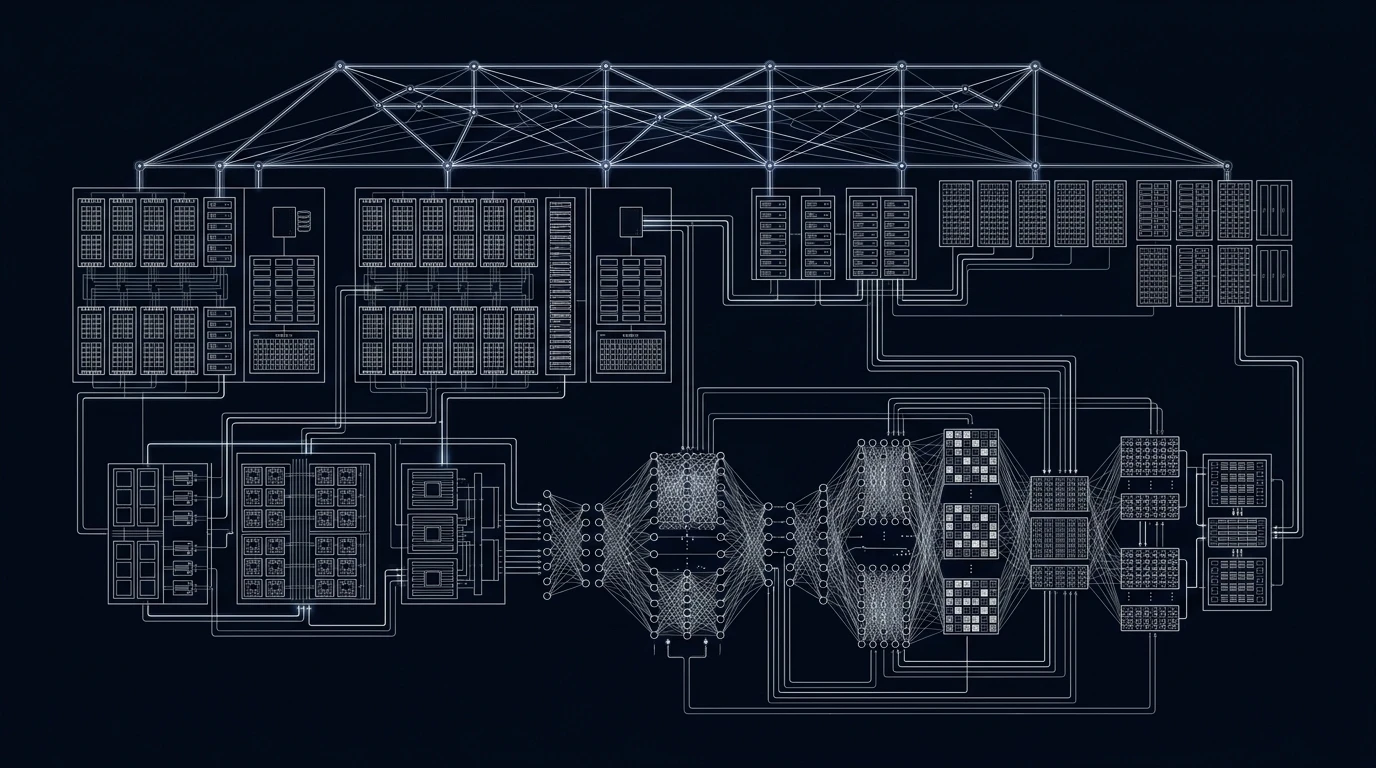
In October 2026, xAI (operating under SpaceX as SpaceXAI / SpaceXSI) completed the initial operational deployment of Colossus 2, its next-generation supercomputing facility in Memphis, Tennessee, while concurrently executing a landmark compute-sharing agreement that signals a structural shift in the frontier AI infrastructure race. Effective October 1, 2026, Google contracted access to approximately 110,000 Nvidia Blackwell GPUs on the Colossus fabric under a multi-year lease valued at roughly $920 million monthly, validating xAI’s dual role as both an algorithmic frontier lab and a tier-one “neocloud” wholesale infrastructure provider. Powering this compute expansion is the operationalization of 550,000 Nvidia Blackwell GPUs—comprising 110,000 GB200 and 440,000 GB300 accelerators—interconnected over liquid-cooled, direct-to-chip NVLink domains. Alongside this hardware milestone, xAI expanded enterprise access to Grok 4.7, its flagship reasoning model engineered for long-horizon agentic workflows, featuring a 500,000-token context window and configurable multi-tier test-time compute.
Key Takeaways
- Hyperscale Wholesale Monetization: Google’s 33-month, 110,000-GPU compute contract ($920M/month) establishes a precedent for frontier AI labs operating as wholesale compute utilities to offset the capital expenditure of gigawatt-scale data centers.
- Liquid-Cooled Blackwell Density: Colossus 2 integrates 550,000 active Nvidia Blackwell GPUs (110k GB200 NVL72 racks and 440k GB300 nodes) with an expansion pipeline targeting 1.44 million GPUs by early 2027.
- Grok 4.7 Variable Reasoning Hierarchy: Introduces granular developer control over reasoning depth (
low,medium,high,xhigh), decoupling fixed-latency model execution to optimize token economics across diverse enterprise tasks. - Disruptive Enterprise API Economics: Anchored at $2.00 per 1M input tokens and $6.00 per 1M output tokens, Grok 4.7 undercuts comparable frontier reasoning models by 30% to 50% across multi-cloud distribution endpoints.
Architectural Analysis: Colossus 2 Blackwell Topology & Neocloud Pivot
The sheer engineering velocity of the Memphis data center cluster represents an aggressive departure from traditional hyperscaler deployment cadences. Where conventional enterprise data centers require 24 to 36 months for power substation commissioning and cooling loops, Colossus 2 was brought online within months by utilizing high-density modular power distribution and proprietary direct-to-chip liquid cooling manifolds capable of dissipating over 120kW per rack.
+---------------------------------------------------------------------------------------------------+
|                                 COLOSSUS 2 PHYSICAL COMPUTE ENVELOPE                              |
|                                                                                                   |
|  +----------------------------------------------------+  +-------------------------------------+  |
|  |             WHOLESALE HYPERSCALER SLICE            |  |         SPACEXAI / GROK CLUSTER     |  |
|  |     (110,000 Blackwell GPUs - Google Leased)       |  |  (440,000+ GB300 Unified Training)  |  |
|  +--------------------------+-------------------------+  +-------------------+-----------------+  |
|                             |                                                |                    |
|                             v                                                v                    |
|  +---------------------------------------------------------------------------------------------+  |
|  |                       OPTICAL INTERCONNECT SPINE & FABRIC MANAGER                           |  |
|  |              - 800Gb/s Quantum-X800 InfiniBand & Spectrum-X Ethernet Fabrics                |  |
|  |              - Non-blocking rail-optimized all-to-all communication topology                |  |
|  +---------------------------------------------------------------------------------------------+  |
|                                                |                                                  |
|                                                v                                                  |
|  +---------------------------------------------------------------------------------------------+  |
|  |                                  FACILITY INFRASTRUCTURE                                    |  |
|  |         - Direct-to-Chip Closed-Loop Cooling | Megawatt Gas Turbines & Grid Substation       |  |
|  +---------------------------------------------------------------------------------------------+  |
+---------------------------------------------------------------------------------------------------+
Colossus 2 divides physical infrastructure into discrete multi-tenant enclaves. The 110,000 GPU allotment provisioned for Google operates within a logically isolated boundary with dedicated InfiniBand spines, ensuring strict data residency and eliminating cross-tenant bus contention. The remaining cluster capacity is dedicated to training xAI’s next-generation multimodal architectures (including Grok 5) and serving real-time enterprise inference through the xAI Developer Platform.
| Infrastructure Metric | Colossus 1 (Memphis Initial) | Colossus 2 (October 2026 Bring-Up) | Standard Tier-4 Enterprise DC |
|---|---|---|---|
| Silicon Architecture | 100,000 Hopper H100/H200 | 550,000 Blackwell GB200/GB300 | Mixed (A100 / H100 / L40S) |
| Interconnect Bandwidth | 3.2 Tb/s per node (InfiniBand) | 14.4 Tb/s per NVL72 domain (NVLink 5) | 400 Gb/s – 800 Gb/s Ethernet |
| Rack Power Density | 35 kW – 40 kW / rack | 120 kW – 132 kW / rack | 12 kW – 20 kW / rack |
| Cooling Subsystem | Rear-door heat exchangers | Direct-to-chip liquid cooling loops | Chilled water air circulation |
| Dedicated Wholesale Slices | Anthropic (Leased May 2026) | Google (110k GPUs, Oct 2026) | Multi-tenant shared public cloud |
| Target Scale (Roadmap) | Static capacity | Scalable to 1.44M GPUs | Incremental enterprise buildouts |
As detailed in our analysis of frontier AI infrastructure dynamics, hyperscalers face acute energy and thermal barriers. xAI’s ability to provision multi-hundred-thousand-chip clusters directly adjacent to high-capacity power lines gives it an asymmetric cost structure when training models with trillions of active parameters.
Grok 4.7 Reasoning Engine: Long-Horizon Agent Economics
While Colossus 2 represents the physical compute substrate, Grok 4.7 represents the algorithmic execution layer. Trained with large-scale reinforcement learning (RL) explicitly geared toward long-horizon task verification, Grok 4.7 is targeted directly at enterprise workflows requiring autonomous code refactoring, complex mathematical derivation, and multi-hop legal analysis.
The architectural centerpiece of Grok 4.7 is its Configurable Reasoning Effort. Rather than imposing fixed reasoning token overhead on every query, xAI exposes four distinct reasoning configurations:
low(Deterministic Fast-Path): Allocates minimal test-time compute. Optimal for high-throughput categorization, structured data extraction, and low-latency API wrappers.medium(Balanced Deliberation): Engages moderate chain-of-thought verification for multi-step workflows, SQL generation, and schema transformations.high(Standard Production Default): Explores multiple candidate branches and applies self-correction passes, targeting enterprise software engineering and technical documentation.xhigh(Deep Search & Formal Verification): Maximizes compute allocation across thousands of reasoning tokens. The model autonomously runs self-consistency checks, refutes counter-hypotheses, and verifies edge cases before generating the final response buffer.
// Sample Integration: Invoking Grok 4.7 with Configurable Reasoning Effort via xAI API
import { OpenAI } from "openai";

const client = new OpenAI({
  apiKey: process.env.XAI_API_KEY,
  baseURL: "https://api.x.ai/v1",
});

async function runEnterpriseAudit(contractContext: string) {
  const response = await client.chat.completions.create({
    model: "grok-4.7",
    messages: [
      {
        role: "system",
        content: "You are an enterprise compliance auditor. Identify indemnification liabilities and export control obligations."
      },
      {
        role: "user",
        content: `Audit the following cross-border agreement under EU AI Act and US EAR regulations:\n${contractContext}`
      }
    ],
    // xAI-specific reasoning parameter
    // Options: "low" | "medium" | "high" | "xhigh"
    reasoning_effort: "xhigh",
    max_tokens: 16384,
    temperature: 0.2,
  });

  console.log(`[Token Usage] Prompt: ${response.usage?.prompt_tokens} | Completion: ${response.usage?.completion_tokens}`);
  return response.choices[0].message.content;
}
The table below benchmarks Grok 4.7 against competing frontier reasoning models across context handling, reasoning pricing, and token economics:
| Evaluation Metric | xAI Grok 4.7 | Anthropic Claude 3.7 Sonnet | OpenAI o3 / GPT-5.6 | Google Gemini 4 Argon |
|---|---|---|---|---|
| Native Context Window | 500,000 tokens | 200,000 tokens (1M preview) | 200,000 tokens | 2,000,000 tokens |
| Input Pricing (per 1M tokens) | $2.00 | $3.00 | $5.00 | $2.50 |
| Output Pricing (per 1M tokens) | $6.00 | $15.00 | $15.00 | $10.00 |
| Reasoning Control | Explicit (low to xhigh) | Dynamic Thinking Budget | Reasoning Effort parameter | Autonomous Verified DAG |
| Prompt Caching Discount | 50% discount on cache hits | 90% discount on cache hits | 50% discount on cache hits | 75% discount on cache hits |
| Knowledge Cutoff | May 2026 | Mid 2026 | Early 2026 | Mid 2026 |
By anchoring output token pricing at $6.00 per million, xAI drastically undercuts Anthropic and OpenAI in reasoning-heavy tasks. Because reasoning models output thousands of “thinking” tokens that are billed as completion tokens, high output pricing has historically made production deployment of reasoning models cost-prohibitive for enterprise batch workloads. Grok 4.7 lowers this barrier, making autonomous agent swarms economically viable.
Enterprise Governance, Multi-Cloud Distribution & Risk Posture
To capture enterprise market share beyond the native api.x.ai gateway, xAI has aggressively diversified distribution. Grok 4.7 is now deployable across Amazon Bedrock, Microsoft Foundry, Oracle Cloud Infrastructure (OCI) Enterprise AI, and GitHub Copilot. This multi-cloud footprint allows regulated enterprises to invoke Grok models while maintaining compliance within their existing cloud governance perimeters.
Key governance and operational dimensions include:
- Zero Data Retention (ZDR) SLAs: Enterprise contract tiers guarantee that input prompts, completion buffers, and reasoning traces are processed purely in ephemeral GPU memory and never persisted for training.
- VPC Peering & Dedicated Instances: Regulated enterprises can deploy dedicated Colossus 2 GPU partitions with direct AWS Direct Connect or Azure ExpressRoute links, preventing transit over the public internet.
- Grounding via Real-Time X Feeds: While consumer Grok relies heavily on public social sentiment, enterprise configurations permit strict grounding isolation—disabling social feeds in favor of private vector stores and enterprise knowledge fabrics.
- Speech & Multimodal Convergence: Transcribe 2.0 and Grok Voice endpoints—detailed in our technical analysis of Grok Voice Transcribe 2.0 telephony architecture—now route directly into Grok 4.7 reasoning loops, enabling end-to-end voice agents with sub-second decision latency.
As explored in our research on agent behavioral contracts and runtime enforcement, enterprise deployments of autonomous reasoning models require strict output schema validation to ensure that long-horizon thinking traces do not drift outside deterministic operational boundaries.
Strategic Outlook for Enterprise Technology Leaders
The convergence of Colossus 2 hardware expansion and Grok 4.7 reasoning availability illustrates that xAI is transitioning from a high-profile challenger into an essential enterprise infrastructure anchor:
- Re-Evaluate Reasoning Model Unit Economics: Organizations currently utilizing high-tier reasoning models for continuous batch verification should benchmark Grok 4.7. The $6.00/1M output pricing tier represents substantial cost reduction for high-volume token generation.
- Leverage Multi-Cloud Endpoints: Rather than managing bespoke API credentials, enterprise architecture teams should utilize existing cloud commitments on Amazon Bedrock or Microsoft Foundry to provision Grok 4.7 within compliant VPC perimeters.
- Plan for Gigawatt-Scale Compute Realities: Google’s contract with Colossus proves that compute access is consolidating into massive physical hubs. Enterprises building on frontier models must evaluate vendor cluster stability, cooling reliability, and wholesale capacity allocation.
For an in-depth review of xAI’s enterprise capabilities, governance framework, and commercial SLAs, explore our comprehensive SpaceXAI Grok Enterprise review.
Related xAI Lab Dossiers
// XAI-DOSSIER
Grok Voice Transcribe 2.0: Telephony Architecture & Benchmarks
Architectural analysis of xAI Grok Voice Transcribe 2.0: 2x telephony accuracy, 8-channel diarization, and $0.10/hr enterprise speech economics.