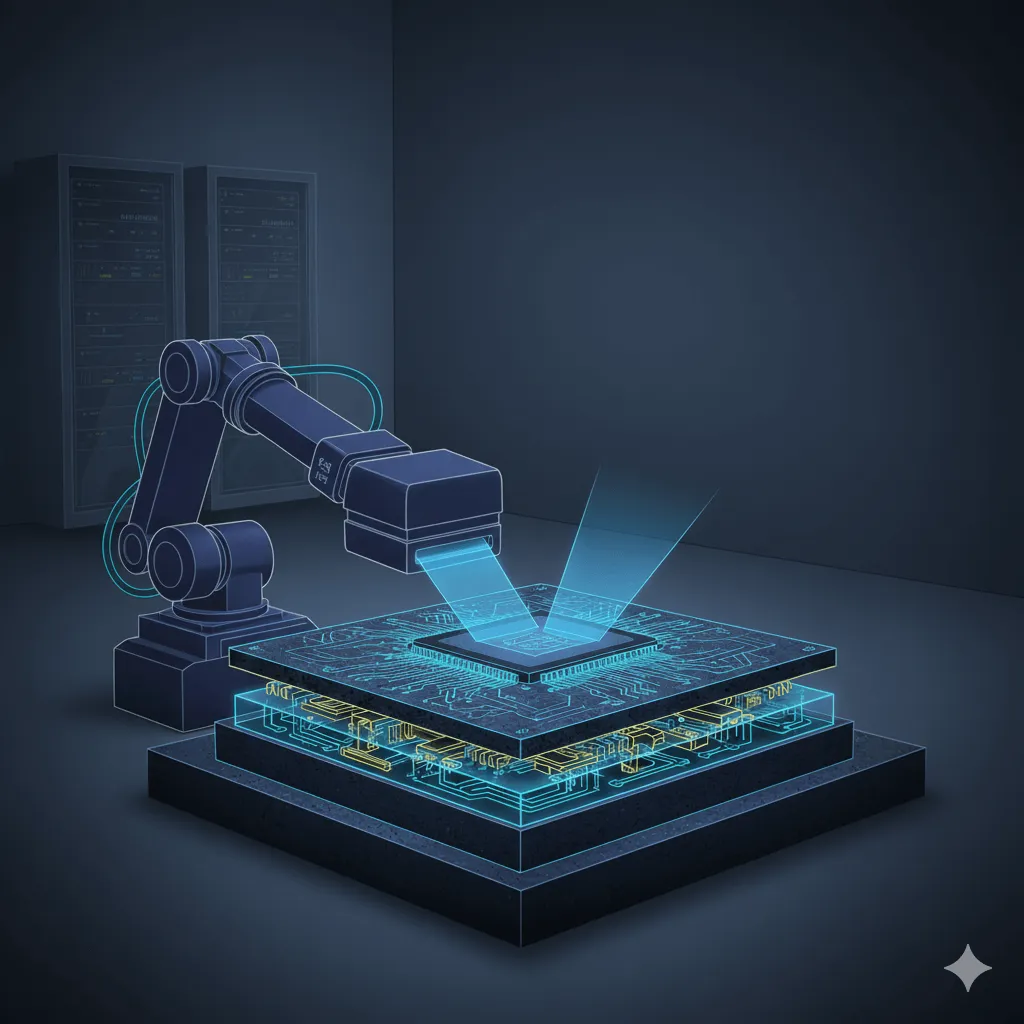
SCIGEN: MIT's Breakthrough in Quantum Materials


In a significant advancement for materials science, researchers at MIT have developed a groundbreaking technique called SCIGEN that enables popular generative AI models to create materials with exotic quantum properties. This innovation could accelerate the discovery of materials crucial for quantum computing and other advanced technologies.
The Challenge of Quantum Material Discovery
For decades, materials scientists have struggled with a fundamental bottleneck: identifying materials with the precise geometric structures needed for exotic quantum properties. While generative AI models from tech giants like Google, Microsoft, and Meta have helped design tens of millions of new materials, they’ve historically struggled with creating materials optimized for quantum applications.
As MIT’s Class of 1947 Career Development Professor Mingda Li explains, “The models from these large companies generate materials optimized for stability. Our perspective is that’s not usually how materials science advances. We don’t need 10 million new materials to change the world. We just need one really good material.”
How SCIGEN Works
SCIGEN (Structural Constraint Integration in GENerative model) is a computer code that ensures diffusion models adhere to user-defined geometric constraints at each iterative generation step. This breakthrough allows researchers to give any generative AI diffusion model specific structural rules to follow when generating materials.
Traditional AI diffusion models work by sampling from their training dataset to generate structures that reflect the distribution found in that dataset. SCIGEN innovates by blocking generations that don’t align with specified structural rules, effectively steering the AI toward creating materials with desired quantum properties.
Breakthrough Results
The MIT researchers tested SCIGEN with a popular AI materials generation model called DiffCSP, focusing on materials with unique geometric patterns known as Archimedean lattices. These lattices can lead to quantum phenomena and have been the focus of extensive research.
The results were remarkable:
- The SCIGEN-equipped model generated over 10 million material candidates with Archimedean lattices
- One million of those materials survived initial stability screening
- Researchers synthesized two previously undiscovered compounds: TiPdBi and TiPbSb
- Subsequent experiments confirmed the AI model’s predictions largely aligned with actual material properties
Implications for Quantum Computing
This breakthrough could significantly accelerate the search for quantum spin liquids—materials that could enable stable, error-resistant qubits for quantum computing. As Professor Weiwei Xie notes, “There’s a big search for quantum computer materials and topological superconductors, and these are all related to the geometric patterns of materials. By generating many materials with these specific patterns, it immediately gives experimentalists hundreds or thousands more candidates to work with.”
Future Applications
Beyond quantum computing, SCIGEN’s potential applications are vast:
- Carbon Capture: Certain Archimedean lattice materials have large pores that could be used for carbon capture
- Next-generation Electronics: Materials with specific geometric patterns could enable new electronic technologies
- Advanced Magnetics: The technique has already shown success in identifying materials with exotic magnetic traits
The researchers emphasize that experimentation remains critical to assess whether AI-generated materials can be synthesized and how their actual properties compare with model predictions. Future work on SCIGEN could incorporate additional design rules, including chemical and functional constraints.
Industry Impact
According to Drexel University Professor Steve May, who was not involved in the research, “This work presents a new tool, leveraging machine learning, that can predict which materials will have specific elements in a desired geometric pattern. This should speed up the development of previously unexplored materials for applications in next-generation electronic, magnetic, or optical technologies.”
This breakthrough represents a paradigm shift in materials discovery, moving from generating vast quantities of stable materials to intelligently targeting those with specific properties that could change the world. With SCIGEN, we’re one step closer to realizing the full potential of quantum technologies and other advanced applications.