Quantum Leap: Solving Complex Protein Folding

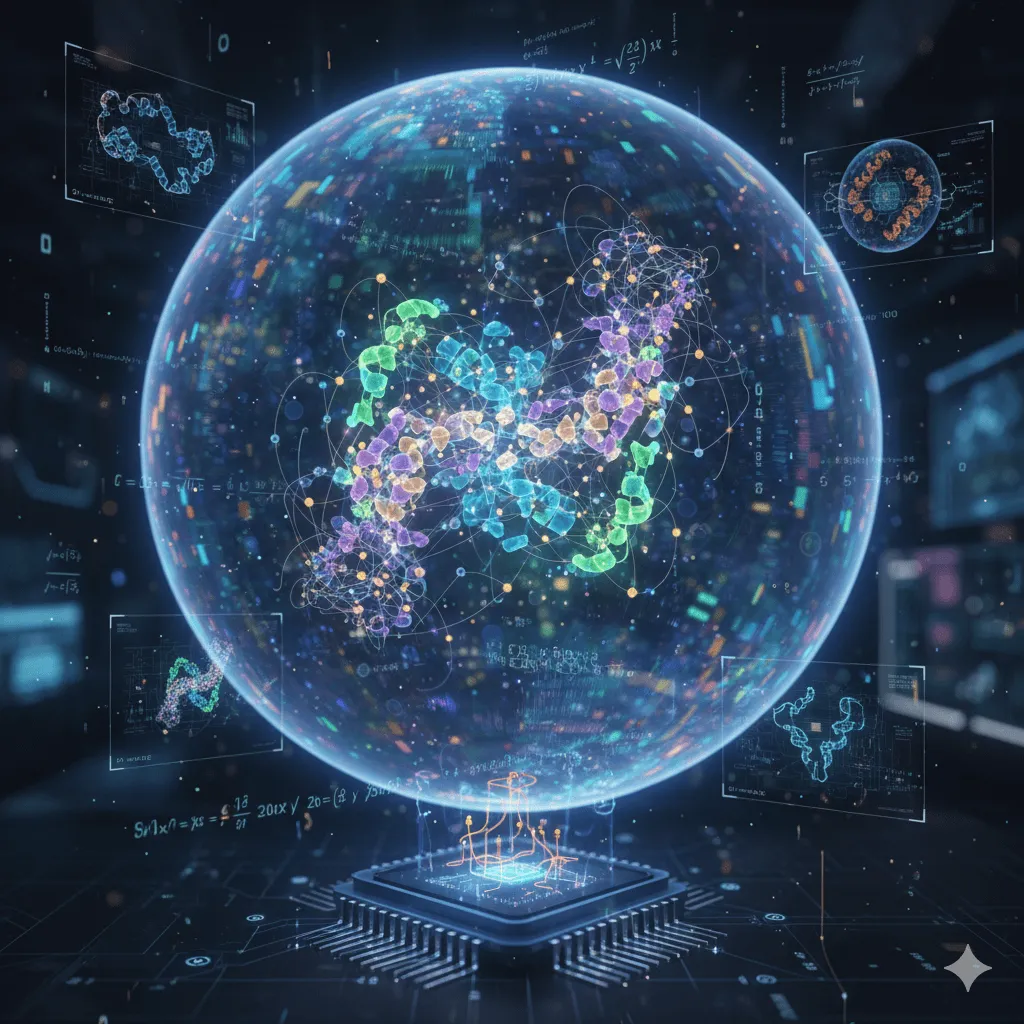
In a groundbreaking advancement that could revolutionize drug discovery, IonQ and Kipu Quantum have jointly solved the most complex protein folding problem ever executed on a quantum computer. This achievement represents a significant milestone in the convergence of quantum computing and life sciences, potentially accelerating the development of new treatments for diseases ranging from cancer to neurodegenerative disorders.
The Quantum Breakthrough in Protein Folding
The collaboration successfully modeled a 3D protein folding problem involving up to 12 amino acids—a new industry record that demonstrates the growing capabilities of quantum computing in tackling complex biological challenges. This achievement surpasses previous efforts in both scale and complexity, marking a significant step toward practical quantum advantage in drug discovery.
Protein folding is one of the most computationally intensive problems in biology. Proteins begin as linear chains of amino acids but must fold into specific 3D structures to function properly. Understanding how proteins fold is crucial for developing new drugs, as misfolded proteins are associated with numerous diseases including Alzheimer’s, Parkinson’s, and cystic fibrosis.
Traditional computing approaches struggle with protein folding simulations due to the astronomical number of possible configurations. A protein with just 100 amino acids can theoretically fold in more ways than there are atoms in the observable universe. Classical computers must evaluate each possibility sequentially, making complex protein folding problems practically impossible to solve within reasonable timeframes.
The Technology Behind the Achievement
The breakthrough was achieved using IonQ’s Forte generation quantum systems combined with Kipu Quantum’s innovative BF-DCQO (Bias-Field Digitized Counterdiabatic Quantum Optimization) algorithm. This combination leveraged several key technological advantages:
All-to-All Qubit Connectivity
IonQ’s trapped-ion quantum computers feature all-to-all connectivity between qubits, a critical advantage for problems like protein folding that involve complex, interconnected relationships. Unlike other quantum architectures that limit connections between qubits, IonQ’s systems allow every qubit to interact directly with every other qubit, dramatically improving computational efficiency for complex optimization problems.
Advanced Algorithmic Framework
Kipu Quantum’s BF-DCQO algorithm provides a non-variational, iterative method that becomes more accurate and resource-efficient with each iteration. This approach is particularly well-suited for protein folding, where long-range interactions between amino acids create complex optimization landscapes that are difficult for classical algorithms to navigate.
Resource Efficiency
The collaboration demonstrated that meaningful results could be achieved with relatively modest quantum resources. The protein folding problem was solved using just 36 qubits, a fraction of the resources that would be required by classical computing approaches for problems of similar complexity.
Implications for Drug Discovery and Medicine
This quantum computing breakthrough has profound implications for the future of drug discovery and medicine:
Accelerated Drug Development
Traditional drug discovery is a lengthy and expensive process, often taking 10-15 years and costing billions of dollars to bring a new drug to market. By enabling faster, more accurate protein folding simulations, quantum computing could dramatically reduce the time and cost of drug development, potentially bringing life-saving treatments to patients years earlier.
Precision Medicine
Understanding protein structures at the quantum level could enable the development of more targeted therapies with fewer side effects. By simulating how proteins interact with potential drug compounds, researchers could design treatments that are precisely tailored to individual patients’ molecular profiles.
Novel Therapeutic Targets
Many diseases involve proteins with complex folding patterns that have remained intractable to classical computing approaches. Quantum computing could unlock new therapeutic targets by revealing previously hidden protein structures and interactions, opening entirely new avenues for treatment development.
The Road Ahead
Looking forward, IonQ and Kipu Quantum plan to extend their collaboration with early access to IonQ’s upcoming 64-qubit and 256-qubit chips. These more powerful systems could tackle even larger, industrially relevant protein folding challenges, potentially enabling the simulation of proteins with hundreds of amino acids.
The companies are also exploring additional use cases that could deliver quantum advantage in the near term across drug discovery, logistics, and material design. As quantum hardware continues to improve and algorithms become more sophisticated, we can expect to see an accelerating pace of breakthroughs in computational biology.
A New Era of Computational Biology
This achievement represents more than just a technical milestone—it signals the beginning of a new era in computational biology where quantum computing plays a central role in understanding and manipulating the fundamental processes of life. As we move toward a future where quantum advantage becomes routine for complex biological problems, the potential for transformative advances in medicine and healthcare becomes increasingly tangible.
The collaboration between IonQ and Kipu Quantum demonstrates that the convergence of quantum computing and life sciences is not a distant possibility but a present reality. While practical quantum advantage for drug discovery may still be years away, today’s breakthroughs are laying the foundation for a future where quantum computing transforms how we understand, treat, and prevent disease.
For pharmaceutical companies and biotechnology firms, the message is clear: the quantum revolution in drug discovery is coming, and those who prepare now will be best positioned to capitalize on the opportunities it presents. As we stand on the brink of this new frontier, one thing is certain—the intersection of quantum computing and biology will be one of the most exciting and impactful areas of technological development in the coming decade.