Defensive Acceleration: OpenAI's Pivotal Shift to Cybersecurity First

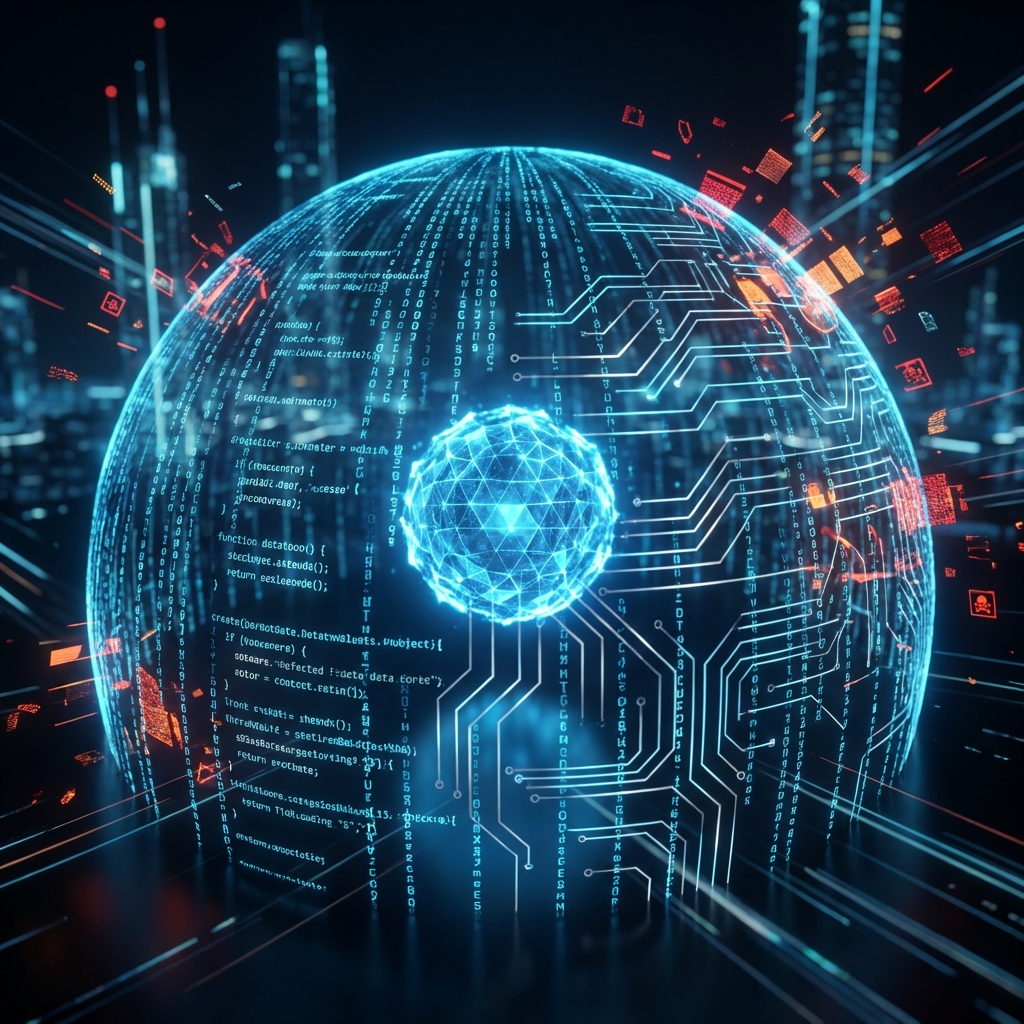
The narrative around AI and cybersecurity has long been dominated by fear: fear of deepfakes, fear of automated hacking, and fear of undetectable phishing. But today, OpenAI flipped the script. In a defining statement, Sam Altman announced an aggressive move toward “Defensive Acceleration,” positioning their coding models not just as tools for builders, but as guardians for the entire digital ecosystem.
Key Takeaways
- Codex Update: Major launches related to Codex are arriving next week, specifically targeting security.
- Defensive Acceleration: A new philosophy where AI is used to patch bugs faster than they can be exploited.
- Cybersecurity High: OpenAI is nearing the highest level of its internal preparedness framework.
The Announcement: AI as the Universal Patch
In a detailed update on X, Altman outlined a future where the primary mitigation for cyber threats is not slower release cycles, but faster, AI-driven remediation.
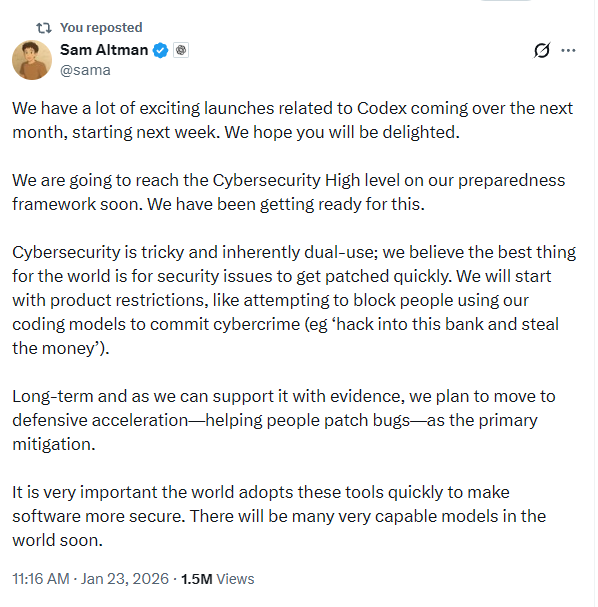
This is a profound shift in strategy. Instead of merely trying to “contain” AI, OpenAI is advocating for “Defensive Acceleration”—the idea that since security vulnerabilities are inevitable, the only viable defense is an AI system capable of identifying and patching them instantly.
Why “Cybersecurity High” Matters
Altman mentioned that OpenAI is about to reach the “Cybersecurity High” level on their preparedness framework. This isn’t just internal jargon; it signals that their models have advanced to a point where they could theoretically be used for sophisticated cyber-operations.
By acknowledging this and simultaneously rolling out product restrictions (blocking “hack this bank” prompts), OpenAI is attempting to thread a needle: giving defenders the ultimate weapon while trying to disarm attackers.
The Dual-Use Dilemma
“Cybersecurity is tricky and inherently dual-use,” Altman noted. The same model that can find a vulnerability to patch it can also find it to exploit it.
This highlights the critical importance of distinct governance, a topic we covered in AI Agent Governance Frameworks. As enterprises integrate these tools, they must rely on the “good guys” having the faster, more capable models. If the defenders (Blue Teams) can use Codex to audit software 100x faster than human auditors, the window of vulnerability shrinks to near zero.
Implications for Enterprise Security
For businesses, this underscores the urgent need to adopt AI-native security tools. As we discussed in AI-Powered Cybersecurity, the manual era of InfoSec is ending.
- Automated Audits: Expect new Codex-powered tools that scan codebases in real-time.
- Self-Healing Infrastructure: We are moving toward systems that can patch themselves upon detection of a threat.
- The Velocity Gap: Companies that don’t use AI for defense will be unable to keep up with AI-enhanced attacks.
Final Thoughts
OpenAI’s pivot to “Defensive Acceleration” is a recognition of reality. promoting a “secure by speed” approach is bold. As these new tools roll out next week, the industry will be watching closely to see if AI can indeed become the shield that outpaces the sword.
The race isn’t just about building smarter models anymore; it’s about building safer software, faster than ever before.