The AI Energy Wars: Why Your Next Data Center Needs a Reactor

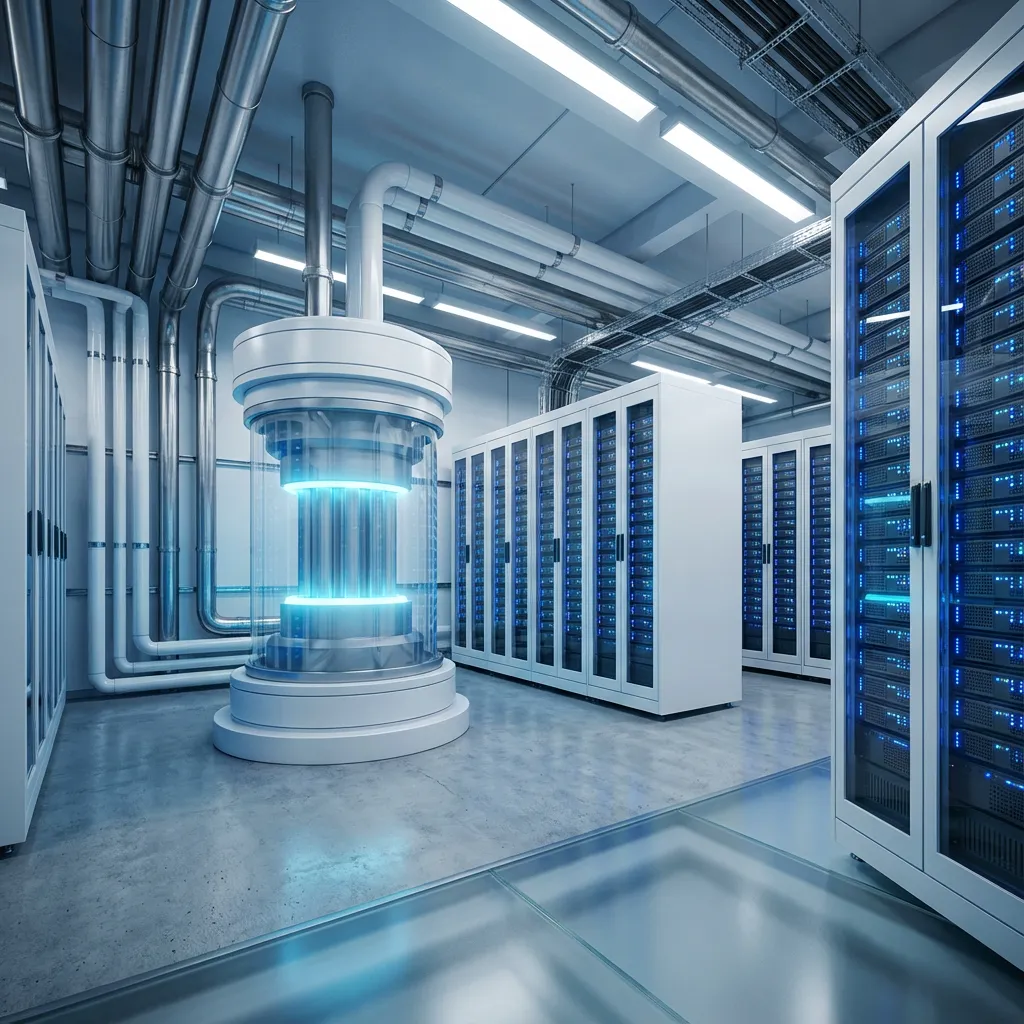
The chip shortage is over. The power shortage has just begun.
For the last three years, the conversation in boardrooms has been about securing H100s and B200s. Executives obsessed over chip allocation, assuming that if they could just get the silicon, their AI strategy was secure. They were wrong.
In 2026, we are witnessing a fundamental shift in the AI hierarchy. The bottleneck is no longer compute capacity; it is electron capacity. As agentic AI architectures move from episodic chats to continuous, always-on swarms, energy consumption has decoupled from human activity hours. Your AI employees work while you sleep, and they are hungry.
Key Takeaways
- The Power Wall: Traditional grids cannot support the gigawatt-scale demands of next-gen training runs and agent swarms.
- Sovereign Microgrids: Tech giants are bypassing utilities to build proprietary energy infrastructure using nuclear SMRs.
- Cost Inversion: Energy is becoming a larger line item than hardware for AI-first enterprises.
- Regulatory Moats: Access to power permits is becoming the new barrier to entry for AI challengers.
The Agentic Energy Multiplier
Why is this happening now? The transition to agentic workflows has fundamentally changed the math of inference costs.
When a user prompts a chatbot, the energy cost is linear and finite. But when an enterprise deploys an autonomous procurement agent, that agent might spawn ten sub-agents: one to scrape vendor data, one to analyze contracts, one to negotiate pricing, and so on. This recursive self-improvement loop creates an exponential spike in inference compute.
While custom silicon has delivered 100x efficiency gains, Jevons paradox is in full effect: increased efficiency has simply driven demand for more complex, continuous workloads. We aren’t doing the same work with less power; we are doing infinitely more work with all the power we can find.
Enter the Nuclear Option
The solution isn’t more solar panels—intermittency is fatal for training runs that cost $500 million. The solution is baseload power that is density-matched to the data center.
Enter Small Modular Reactors (SMRs).
Unlike the massive gigawatt-scale plants of the 20th century, SMRs are factory-built, self-contained units that can be deployed directly on-site. Major tech players are realizing that waiting for the public grid upgrade queue (which can be 5-10 years) is existential suicide.
Industry forecasts for 2026 indicate that “mini nuclear power plants” are emerging as the only viable path for sustaining the AI growth curve. We are moving toward a future where “Data Center” and “Power Plant” are synonymous terms.
The Sovereign Energy Stack
This brings us to a new geopolitical reality. We’ve talked about data sovereignty and model sovereignty, but 2026 is the year of energy sovereignty.
The enterprises that win this decade won’t just own their models; they will own their electrons. Sovereign AI is no longer just about where your data sits—it’s about whether you have the physical capability to process it without asking a utility provider for permission.
As Data Center Knowledge reports, the industry is facing a strict “compute-energy gap.” Without sovereign power generation, companies are effectively capped on their intelligence capacity. You can buy all the GPUs you want, but if you can’t plug them in, you have a very expensive paperweight.
Final Thoughts
The era of cheap, abundant grid power for competitive AI is closing. The next phase of digital transformation requires a physical transformation.
CIOs need to stop thinking of energy as a utility bill and start treating it as a core architectural component. If your AI roadmap doesn’t include an energy roadmap, you aren’t building a strategy—you’re building a dependency.
The question for 2026 isn’t “How smart is your model?” It’s “How sovereign is your grid?”