Liquid Neural Networks: The Fluid Future of Edge AI

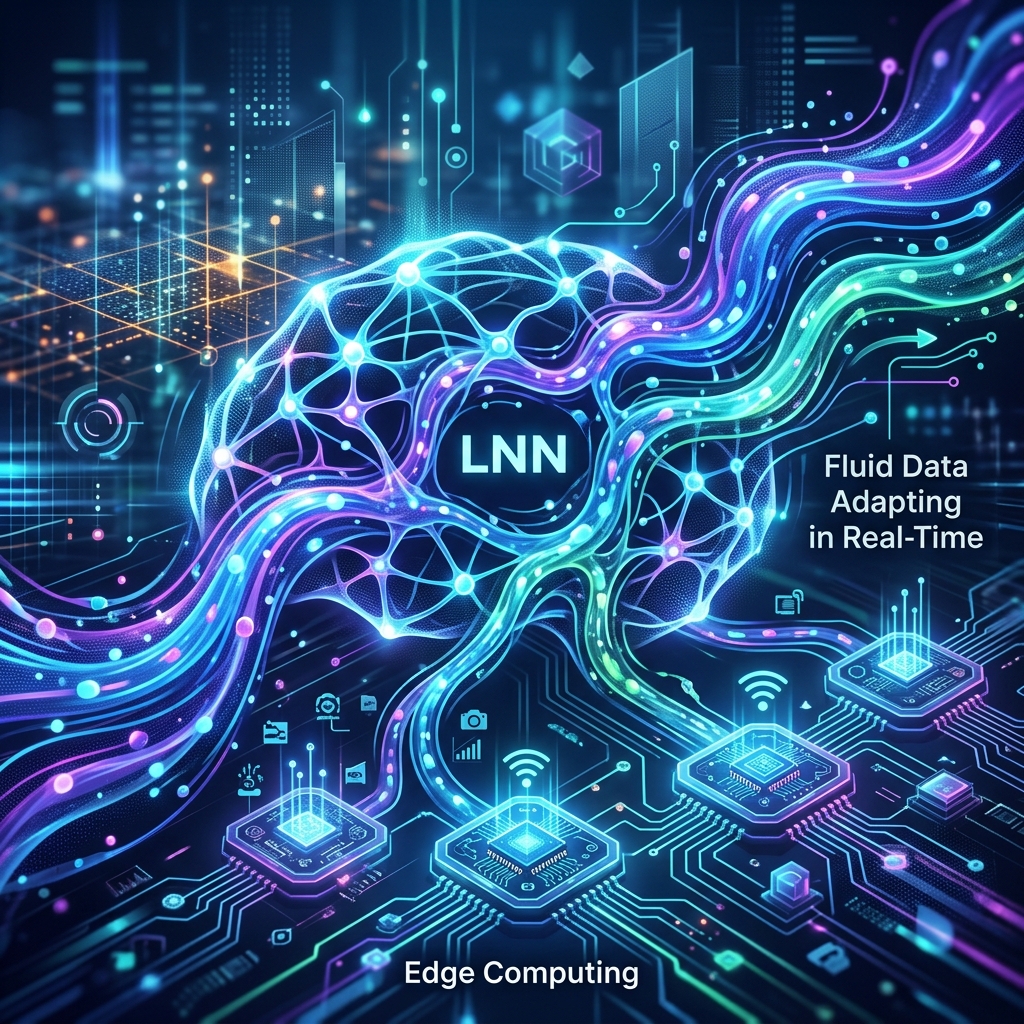
Static AI models are becoming a liability in environments that demand split-second adaptation to unpredictable data.
Key Takeaways
- Continuous Learning: Liquid Neural Networks (LNNs) adapt and learn even after their initial training phase.
- High Efficiency: Their compact architecture significantly reduces computational overhead, ideal for edge deployment.
- Real-World Resilience: LNNs bring unprecedented robustness to autonomous systems, robotics, and financial modeling.
The Problem with Rigid Intelligence
Most deep learning models today are frozen in time. Once trained, their parameters are locked, rendering them brittle when faced with out-of-distribution data or rapidly changing real-world conditions. For businesses deploying physical AI and robotics, this rigidity can lead to catastrophic failures when environments shift unexpectedly.
This is where Liquid Neural Networks (LNNs), a class of algorithms pioneered by researchers at MIT CSAIL, are changing the paradigm.
Fluid Adaptation on the Edge
Unlike traditional models, the parameters of an LNN continue to evolve in response to incoming data streams. They effectively “learn on the job,” adjusting to noise and novel situations without requiring a massive, power-hungry retraining cycle in the cloud.
Because LNNs can operate with a fraction of the neurons required by standard neural networks, they represent a massive leap in edge AI inference acceleration. Businesses can now run sophisticated, adaptive AI directly on drones, factory sensors, and autonomous vehicles without relying on continuous cloud connectivity. The ability to process data locally not only reduces latency but also significantly enhances data privacy and security.
Real-World Business Implications
The applications for this fluid intelligence extend far beyond robotics. According to industry analyses from publications like Wired, adaptive neural architectures will be crucial for the next generation of smart city infrastructure and logistics networks. In financial services, LNNs can model highly volatile time-series data, dynamically adjusting to market shocks that would break traditional forecasting models.
Furthermore, their compact size makes them far more interpretable. As we transition toward an agentic AI workforce, the ability to audit and understand an AI’s decision-making process will be a crucial regulatory requirement. LNNs provide a level of transparency that massive black-box models simply cannot match, giving enterprises the confidence to deploy them in mission-critical scenarios.
Final Thoughts
The era of “train once, deploy forever” is ending. To remain competitive, enterprises must embrace AI systems that are as dynamic and adaptable as the markets they operate in. Liquid Neural Networks offer a powerful, efficient path toward truly autonomous, resilient business infrastructure.