Applied Intuition Dana: Agentic AI for Physical Systems

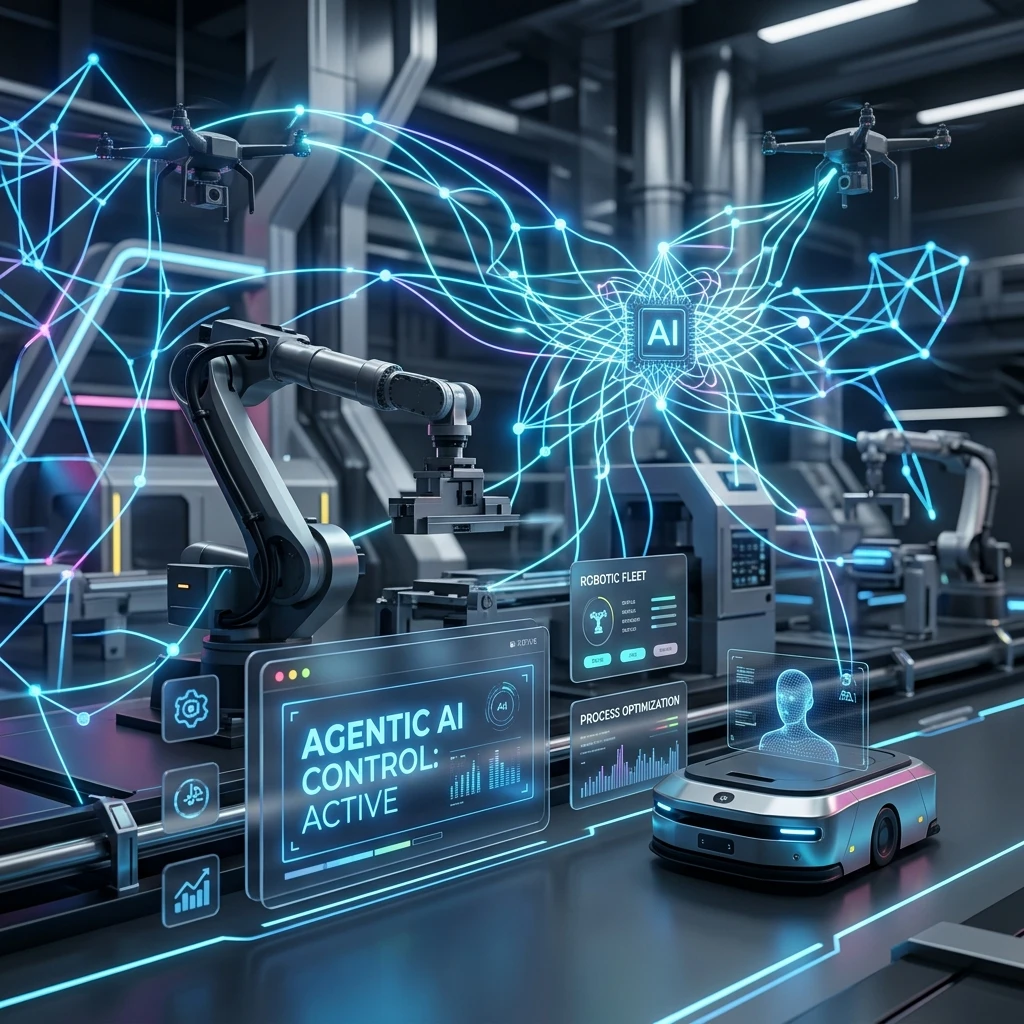
Developing autonomous hardware has historically meant wrestling with fragmented sensor pipelines, custom labeling jobs, and high-friction safety validation loops. Today, Applied Intuition announced the launch of Dana, marking a significant milestone: bringing natural-language agentic workflows directly to physical AI and robotics engineering.
Key Takeaways
- First Dedicated Agentic Platform for Hardware: Dana is engineered specifically to construct, validate, and orchestrate autonomous physical machines across automotive, mining, construction, robotics, and defense.
- Months to Days Acceleration: By leveraging agentic automation for sensor data labeling, synthetic scenario generation, and safety testing, development iteration times are reduced dramatically.
- Natural Language Orchestration: Engineers can interact with complex simulation engines and hardware testing suites using conversational intent rather than custom scripting.
- Bridging Digital & Physical AI: The platform advances the broader shift toward physical AI in the enterprise, moving AI from software advisory roles to embodied real-world action.
Shifting from Chatbots to Embodied Systems
While frontier LLMs have dominated digital productivity, physical systems require an entirely different operational paradigm. Autonomous trucks, industrial robots, and defense platforms operate under unforgiving physical constraints where hallucinated outputs carry real-world consequences.
Dana addresses this by wrapping agentic AI capabilities around Applied Intuition’s established simulation and data infrastructure. Rather than replacing physical validation, the platform uses AI agents to automate the tedious groundwork of physical AI engineering. Tasks like curating edge-case dataset clips, configuring high-fidelity physics simulations, and verifying safety compliance across regulatory standards can now be executed via natural language instructions.
This capability builds directly on recent advancements in spatial intelligence for enterprise applications, where models must reason about 3D space, kinematics, and environmental dynamics simultaneously.
Technical Architecture and Agentic Automation
The core innovation of Dana lies in its multi-agent orchestration architecture. Instead of relying on a single monolithic model, the platform coordinates specialized agents tuned for specific stages of the hardware lifecycle:
1. Automated Data Curation & Labeling
Raw sensor feeds from LIDAR, radar, and camera rigs are analyzed autonomously. Agents isolate critical driving or operating maneuvers, automatically annotate multi-modal data streams, and flag anomalies without human intervention.
2. Generative Simulation & Edge-Case Testing
Testing physical machines requires exposing them to millions of rare scenarios. Dana enables engineers to describe complex edge cases—such as sudden weather shifts or unexpected obstacles—in natural language. The system then generates corresponding high-fidelity simulation environments automatically.
3. Long-Horizon Task Execution & Verification
Evaluating autonomous hardware demands long-horizon reasoning. Much like software benchmarks evaluate long-context reasoning in AutoLab agent evaluation frameworks, Dana evaluates how physical AI agents handle complex, multi-step operational tasks across extended execution windows.
Stated Limitations and Operational Challenges
Despite its transformative potential, Applied Intuition and early reviewers have noted several key limitations:
- Enterprise-First Rollout: As detailed by Semafor coverage on the launch, Dana is initially restricted to enterprise partners, with self-serve developer access slated for future phases.
- Sim-to-Real Fidelity Gap: While high-fidelity simulations drastically accelerate testing, real-world physical edge cases can still diverge from simulated environments, requiring mandatory hardware-in-the-loop (HIL) validation.
- Compute and Data Overhead: Running real-time multi-agent orchestration alongside high-resolution sensor simulation demands substantial compute infrastructure and optimized data pipelines.
Business Implications: The Billion-Machine Era
Applied Intuition’s explicit goal with Dana is to power intelligence across a billion machines. For enterprise executive teams and engineering leaders, this launch carries immediate strategic implications:
- Lowering the Barrier for Hardware Autonomy: Traditional heavy equipment and automotive OEMs can now deploy autonomous features without building massive in-house AI infrastructure teams from scratch.
- Compression of R&D Cycles: Shifting data processing and simulation setup from months to days directly reduces capital expenditure and accelerates time-to-market for autonomous commercial products.
- Standardizing Autonomous Safety: By unifying data curation, simulation, and verification inside an agentic control plane, organizations can establish auditable safety trails required by global regulators.
Final Thoughts
The launch of Applied Intuition Dana signals that agentic AI is stepping off the screen and into physical operations. As physical AI transitions from specialized laboratory experiments into scalable enterprise software platforms, companies that integrate autonomous agent workflows into their hardware pipelines will define the next decade of industrial automation.