AI Hyper-Personalization: Emotional Intelligence 2025

The New Frontier of Customer Understanding
In the bustling digital marketplace of 2025, successful businesses are those that truly understand their customers—not just their purchasing patterns or browsing history, but their emotional states, communication preferences, and real-time needs. This transformation is being driven by a groundbreaking convergence of artificial intelligence and emotional intelligence, creating hyper-personalization systems that can read between the lines of customer interactions.
Welcome to the era where AI doesn’t just predict what you want—it understands how you’re feeling and tailors experiences accordingly.
The Evolution from Personalization to Emotional Intelligence
Traditional personalization systems relied heavily on historical data: what you bought before, what you viewed, what similar customers purchased. While effective to a degree, these systems operated in a vacuum of emotional context. They might recommend a beach vacation package to someone who previously bought sunscreen, without considering that the customer might be dealing with a recent job loss or family stress that makes leisure travel unappealing.
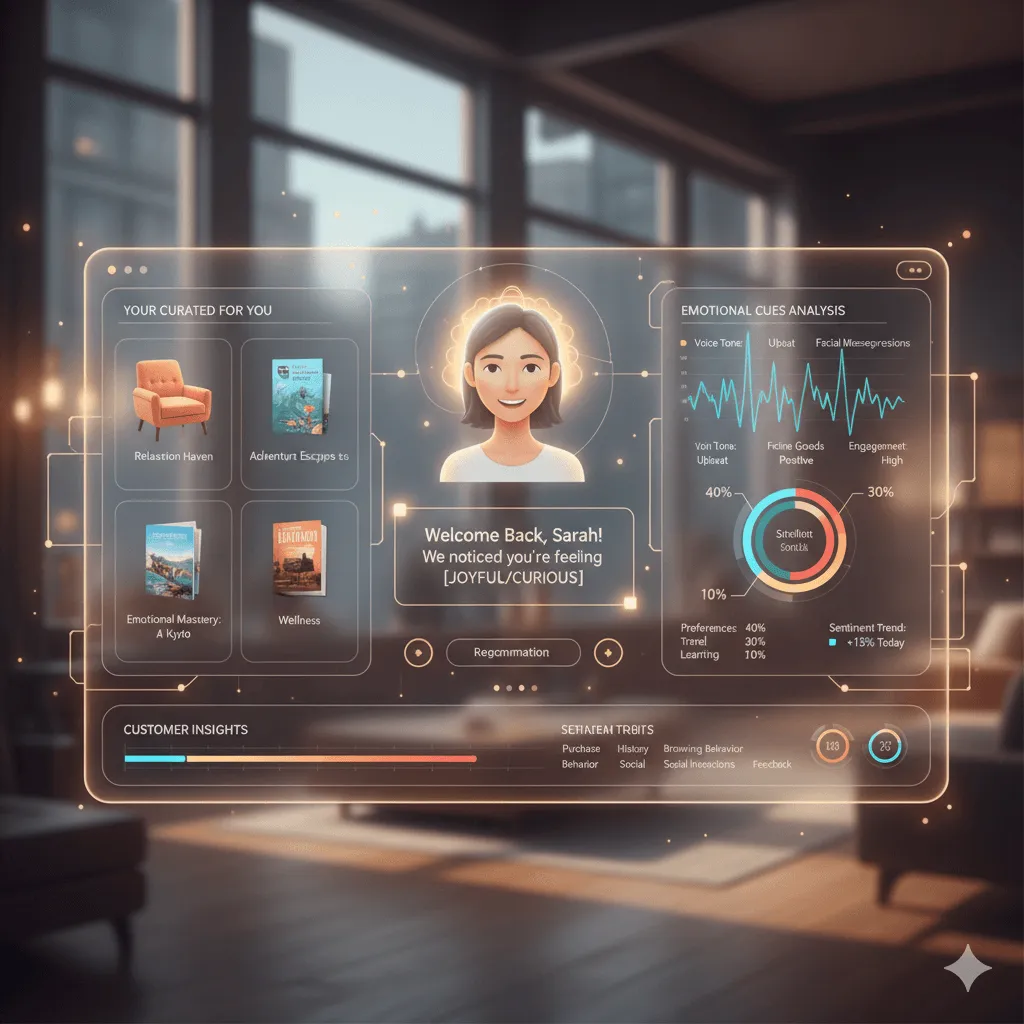
The breakthrough in 2025 comes from AI systems that can interpret emotional cues from multiple data sources simultaneously:
- Voice Analysis: Real-time tone and inflection detection during customer service calls
- Text Sentiment: Subtle emotional indicators in emails, chat conversations, and social media posts
- Behavioral Patterns: Changes in browsing speed, mouse movements, and interaction timing
- Biometric Integration: Where permitted, heart rate and other physiological indicators from wearable devices
- Contextual Awareness: Current events, seasonal factors, and life stage indicators
The Technology Behind Emotional AI
Multi-Modal Emotion Detection
Modern emotional AI systems are multi-modal, meaning they don’t rely on a single source of emotional data. Instead, they create comprehensive emotional profiles by analyzing:
- Linguistic Cues: Beyond simple sentiment analysis, these systems understand sarcasm, frustration, excitement, and nuanced emotional states through advanced natural language processing
- Paralinguistic Features: In voice interactions, AI analyzes pitch, volume, pace, and pauses to detect emotional states that words alone might not reveal
- Visual Micro-Expressions: Video interactions and even static images can be analyzed for subtle facial expressions that indicate emotional states
- Interaction Dynamics: How users navigate interfaces, the speed of their actions, and their response to different elements all provide emotional intelligence data
Real-Time Adaptive Personalization
The real power of emotional AI lies in its ability to adapt experiences in real-time based on detected emotional states. Consider a customer service scenario:
A customer contacts support about a billing issue. Traditional systems might route them based on issue type. Emotional AI, however, detects frustration in the customer’s voice and text messages, immediately escalating the case and personalizing the interaction approach. The AI assistant adjusts its tone to be more empathetic, offers specific solutions rather than generic troubleshooting steps, and even suggests a callback at a more convenient time based on the customer’s expressed schedule.
Enterprise Applications Across Industries
Retail and E-commerce
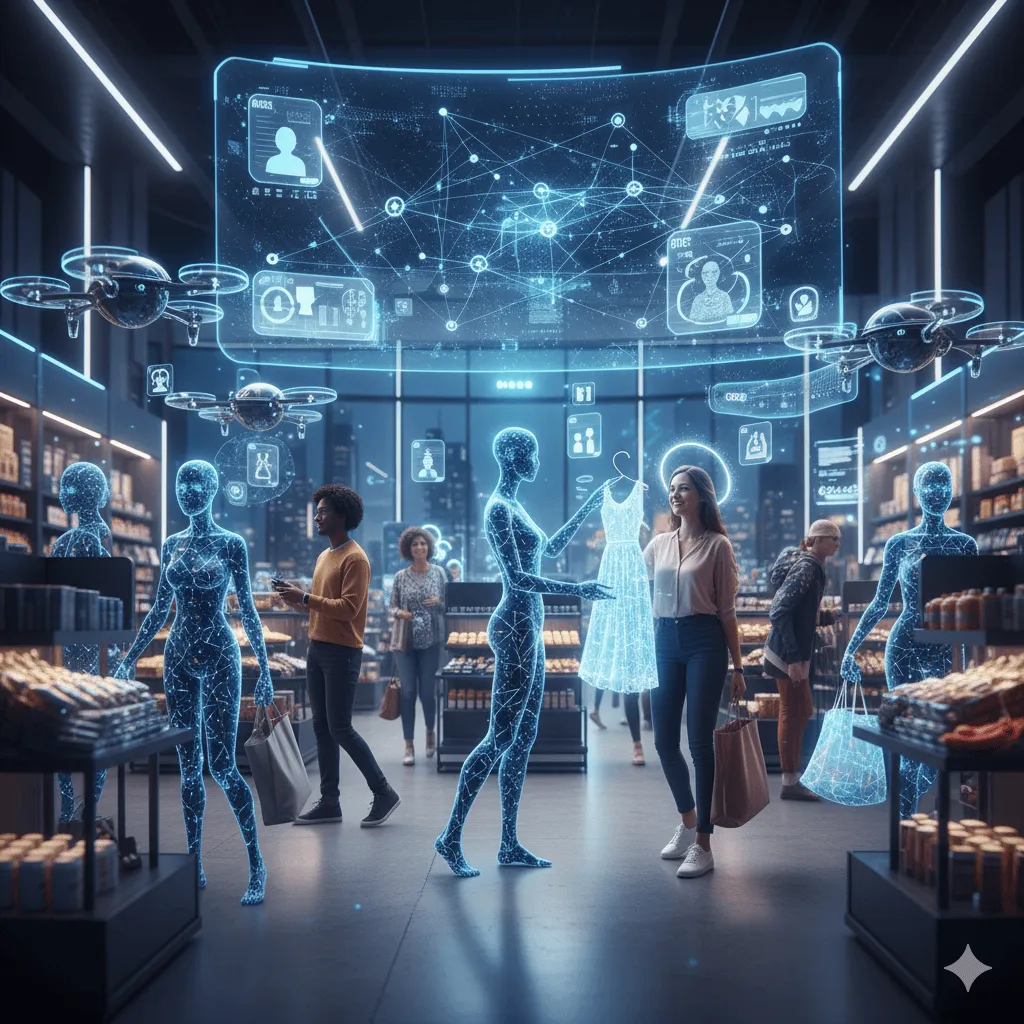
In 2025, leading retailers are using emotional AI to transform shopping experiences:
- Dynamic Product Recommendations: Rather than static suggestions based on past purchases, AI systems adjust recommendations based on the customer’s current emotional state and context
- Personalized Pricing Sensitivity: Systems can detect when customers are price-sensitive versus when they prioritize quality or convenience, adjusting both product suggestions and pricing information accordingly
- Virtual Shopping Assistants: AI concierges that understand not just what customers say they want, but what they might actually need based on emotional cues and behavioral patterns
Healthcare and Wellness
Emotional AI is revolutionizing patient care and wellness programs:
- Mental Health Monitoring: AI systems can detect changes in patient emotional states through regular interactions, alerting healthcare providers to potential issues before they become critical
- Personalized Treatment Plans: Mental health apps adjust therapeutic content and interaction styles based on real-time emotional assessments
- Medication Adherence: Systems can detect when patients are frustrated or confused about their treatment regimens and provide additional support or simplified instructions
Financial Services
Banks and financial institutions are leveraging emotional AI to improve customer relationships:
- Fraud Detection with Context: Rather than simply flagging unusual transactions, emotional AI can determine if a customer’s stress about a flagged transaction indicates actual fraud or a legitimate but unusual purchase
- Financial Wellness Coaching: AI advisors adjust their communication style and advice based on customer stress levels, financial confidence, and life circumstances
- Loan and Credit Decisions: While maintaining regulatory compliance, emotional AI can provide additional context about customer situations that might affect their financial behavior
The Privacy and Ethics Imperative
As powerful as emotional AI is, its implementation requires careful consideration of privacy and ethical concerns:
Consent and Transparency
Organizations must be explicit about what emotional data they collect and how it’s used. This includes:
- Clear Opt-In Mechanisms: Customers should actively consent to emotional data collection
- Transparent Algorithms: Providing explanations for how emotional data influences personalization decisions
- Granular Controls: Allowing customers to control which aspects of emotional data collection they’re comfortable with
Bias Mitigation
Emotional AI systems must be carefully designed to avoid bias:
- Cultural Sensitivity: Emotional expressions vary significantly across cultures, requiring systems to be trained on diverse datasets
- Disability Considerations: Systems must account for conditions that affect emotional expression, such as autism spectrum disorders
- Age-Appropriate Interpretation: Children and elderly users may express emotions differently, requiring specialized models
Implementation Strategies for Enterprises
Building the Right Foundation
Organizations looking to implement emotional AI should start with:
- Data Infrastructure: Ensure you have the capability to collect, process, and analyze multi-modal emotional data
- Privacy Frameworks: Establish robust data governance and privacy protection mechanisms
- Ethical Guidelines: Develop clear policies for the ethical use of emotional intelligence data
- Integration Planning: Plan how emotional AI will integrate with existing CRM, marketing, and customer service systems
Measuring Success
The success of emotional AI implementations should be measured not just by traditional metrics like conversion rates, but also by:
- Customer Satisfaction Scores: Particularly focusing on emotional satisfaction indicators
- Customer Retention: Long-term relationship metrics that reflect genuine customer loyalty
- Reduced Escalation Rates: Fewer customer service escalations indicate better emotional understanding
- Reduced Return Rates: Better emotional matching should result in fewer product returns due to mismatched expectations
The Road Ahead
As we progress through 2025, emotional AI is becoming less of a futuristic concept and more of a business necessity. Companies that successfully integrate emotional intelligence into their personalization strategies are seeing:
- 30-50% increases in customer satisfaction scores
- 20-30% improvements in conversion rates
- Significant reductions in customer service costs
- Higher customer lifetime value
However, the technology is still evolving. Future developments will likely include:
- Enhanced Cross-Cultural Intelligence: More sophisticated understanding of cultural differences in emotional expression
- Improved Real-Time Adaptation: Faster processing and response to emotional changes
- Advanced Privacy-Preserving Techniques: Methods that can derive emotional insights without storing sensitive personal data
- Integration with Emerging Technologies: Combining emotional AI with AR/VR, IoT, and other emerging technologies
Conclusion
The integration of emotional intelligence into AI personalization represents a fundamental shift in how businesses understand and serve their customers. In 2025, the companies that thrive will be those that recognize that customers are not just data points to be optimized, but human beings with complex emotional lives that deserve to be understood and respected.
As AI continues to evolve, the organizations that balance technological capability with human empathy will find themselves with unprecedented opportunities to create meaningful, lasting customer relationships. The future of personalization isn’t just about knowing what customers want—it’s about understanding how they feel and responding with genuine care and intelligence.