Agentic Commerce: AI Shopping Agents Revolution

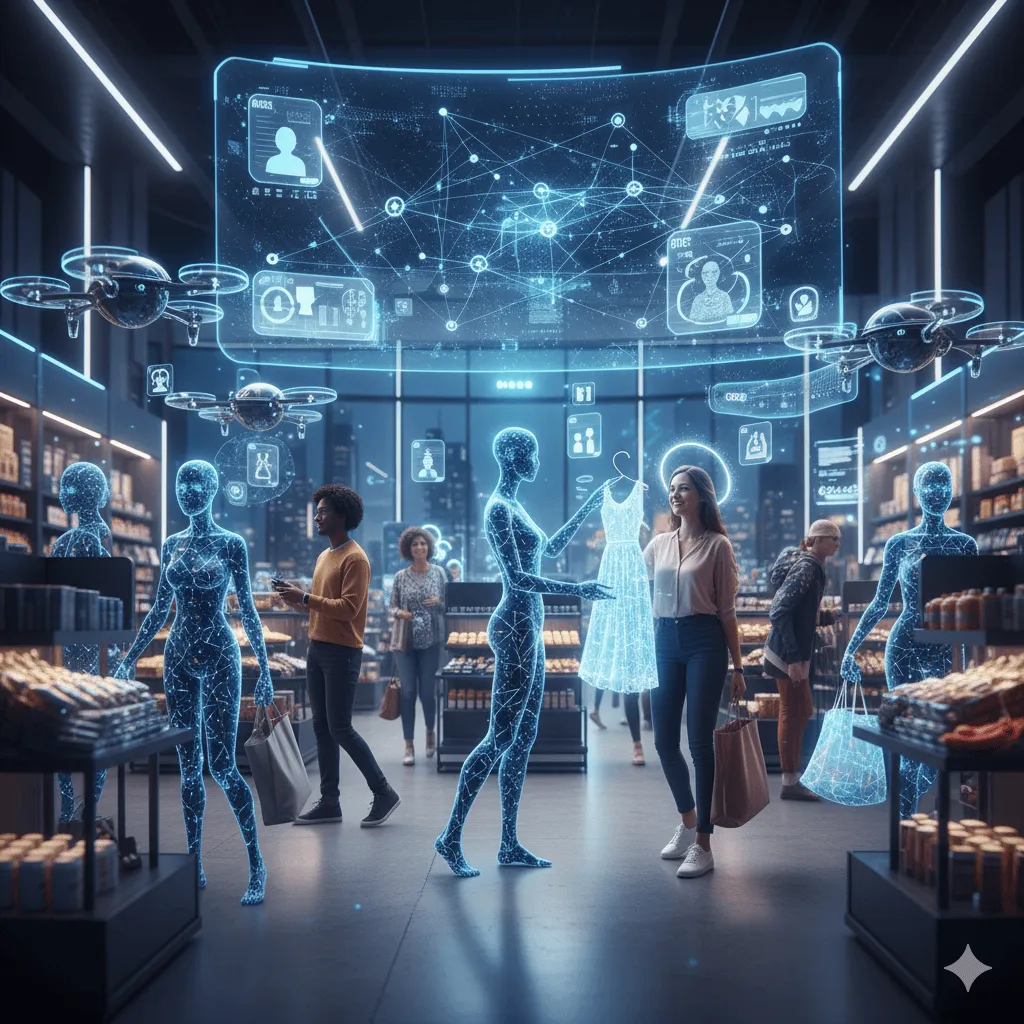
The retail landscape is undergoing a fundamental transformation as AI shopping agents take center stage in the consumer journey. Welcome to the era of agentic commerce, where intelligent systems don’t just recommend products—they complete purchases autonomously, fundamentally changing how we shop and how businesses sell.
The Rise of AI Shopping Agents
Agentic commerce represents a paradigm shift from traditional e-commerce, where consumers actively search, compare, and decide, to a new model where AI agents handle the entire shopping process. These sophisticated systems can complete purchases autonomously.
- Understand complex consumer preferences and budget constraints
- Scan multiple platforms simultaneously for the best deals
- Filter results based on individual needs and priorities
- Compare features, prices, and delivery options
- Complete transactions without human intervention
Major platforms like Perplexity, ChatGPT, and Google Gemini are rapidly embedding comprehensive commerce functionalities into their AI interfaces. Perplexity’s “Buy with Pro” feature allows users to browse products and complete one-click purchases directly from select merchants. ChatGPT’s “Instant Checkout” enables customers to move seamlessly from product discovery to payment within the chat window. Google’s AI Mode shopping interface is expanding to include advanced agentic capabilities that will enable users to track prices and confirm purchases directly within the platform.
Why Agentic Commerce Matters
The implications of this shift extend far beyond convenience. According to recent data, traffic to US retail sites from GenAI browsers and chat services increased a staggering 4,700% year-over-year in July 2025. More importantly, these AI-driven visitors are more engaged than traditional shoppers—they spend 32% more time on sites, browse 10% more pages, and have a 27% lower bounce rate.
This increased engagement translates to higher conversion rates. Consumers arriving via AI agents are 10% more engaged than traditional visitors and reach retailers further down the sales funnel with a stronger intent to purchase. The efficiency gains are substantial: by automating routine shopping tasks, agentic commerce reduces the time and effort required to make purchases, creating a more streamlined and satisfying experience.
The Technology Behind Agentic Commerce
The emergence of agentic commerce is powered by several key technological advances:
Advanced Reasoning Capabilities
Modern AI agents possess sophisticated reasoning abilities that allow them to understand nuanced consumer requests and make informed decisions. Unlike earlier recommendation systems that simply matched keywords to products, today’s agents can interpret context, understand implications, and make logical inferences about what consumers actually need.
Seamless Payment Integration
Platforms are developing secure, streamlined checkout processes that enable agents to complete transactions on behalf of users. Google Pay integration, PayPal partnerships, and proprietary payment protocols are making it possible for agents to handle the entire purchase process without requiring human intervention.
Retrieval-Augmented Generation (RAG)
Agents leverage RAG systems to access and process vast amounts of product information, reviews, and pricing data in real-time. This allows them to provide accurate, up-to-date recommendations based on comprehensive knowledge of the market.
Challenges for Traditional Retailers
The rise of agentic commerce presents significant challenges for traditional retailers. As AI platforms become the default entry point for online shopping, retailers risk being bypassed entirely in the customer journey. This disintermediation threatens to:
- Reduce direct access to customers
- Weaken brand loyalty
- Increase dependence on intermediary platforms
- Limit access to first-party customer data
Moreover, AI agents prioritize different factors than human shoppers. They focus on price, user ratings, delivery speed, and real-time inventory rather than brand familiarity or emotional connections. This shift could reshape how retailers compete and how purchase decisions are made.
Opportunities for Forward-Thinking Businesses
Despite these challenges, agentic commerce creates new opportunities for businesses that adapt quickly:
Enhanced Customer Service
Retailers can develop their own AI agents that showcase their brand’s unique value proposition while providing personalized shopping assistance. These proprietary agents can maintain brand consistency while delivering the convenience that consumers demand.
Improved Product Data
To succeed in an agentic commerce environment, retailers must invest in AI-ready content operations. This means structuring product data to be authoritative, semantically rich, factual, and machine-readable. Success requires continuous, modular content production that enables generative engines to surface brand and product information effectively.
Strategic Platform Partnerships
Rather than competing with AI platforms, smart retailers are partnering with them. By optimizing their presence on third-party agents and capitalizing on emerging paid advertising opportunities, businesses can maintain visibility in an increasingly agent-driven marketplace.
The Future of Shopping
As we look toward the future, agentic commerce will continue to evolve in exciting ways:
Increased Autonomy
AI agents will take on more complex tasks, from managing subscription services to predicting future needs based on consumption patterns. We’ll see agents that can reorder household essentials automatically or plan seasonal wardrobes based on weather forecasts and personal preferences.
Cross-Platform Integration
Future agents will seamlessly coordinate purchases across multiple retailers and service providers. A single agent might plan a vacation by booking flights, reserving hotels, purchasing travel gear, and arranging transportation—all optimized for the consumer’s preferences and budget.
Enhanced Personalization
As agents gather more data about consumer behavior and preferences, they’ll become increasingly sophisticated at predicting needs and making proactive recommendations. This could lead to a future where consumers rarely need to actively shop for routine purchases.
Preparing for the Agentic Future
For businesses, the message is clear: agentic commerce is not a future possibility but a present reality that will only accelerate. Companies that fail to adapt risk being left behind as AI agents become the primary interface between consumers and retailers.
Retailers must reimagine customer engagement while embracing AI technologies. This requires investment across three key pillars:
- Winning with Third-Party Agents: Enhance discoverability through generative experience optimization and capitalize on emerging advertising opportunities.
- Building Proprietary Agents: Develop branded AI assistants that showcase unique value propositions while providing personalized service.
- Creating AI-Ready Infrastructure: Structure data and content to be machine-readable and semantically rich for optimal agent interaction.
The agentic commerce revolution is here, and it’s transforming retail as we know it. For consumers, it promises a more convenient, efficient, and personalized shopping experience. For businesses, it presents both challenges and opportunities that will define the competitive landscape for years to come. Those who embrace this transformation early will be best positioned to thrive in the new era of AI-driven commerce.