Anthropic EFS: Zero-Retention Safeguards and BYOS Architecture
// Dossier Executive Lead
Architectural evaluation of Anthropic's Enterprise Frontier Safeguards (EFS): customer-owned telemetry, zero retention, and automated safety monitors.
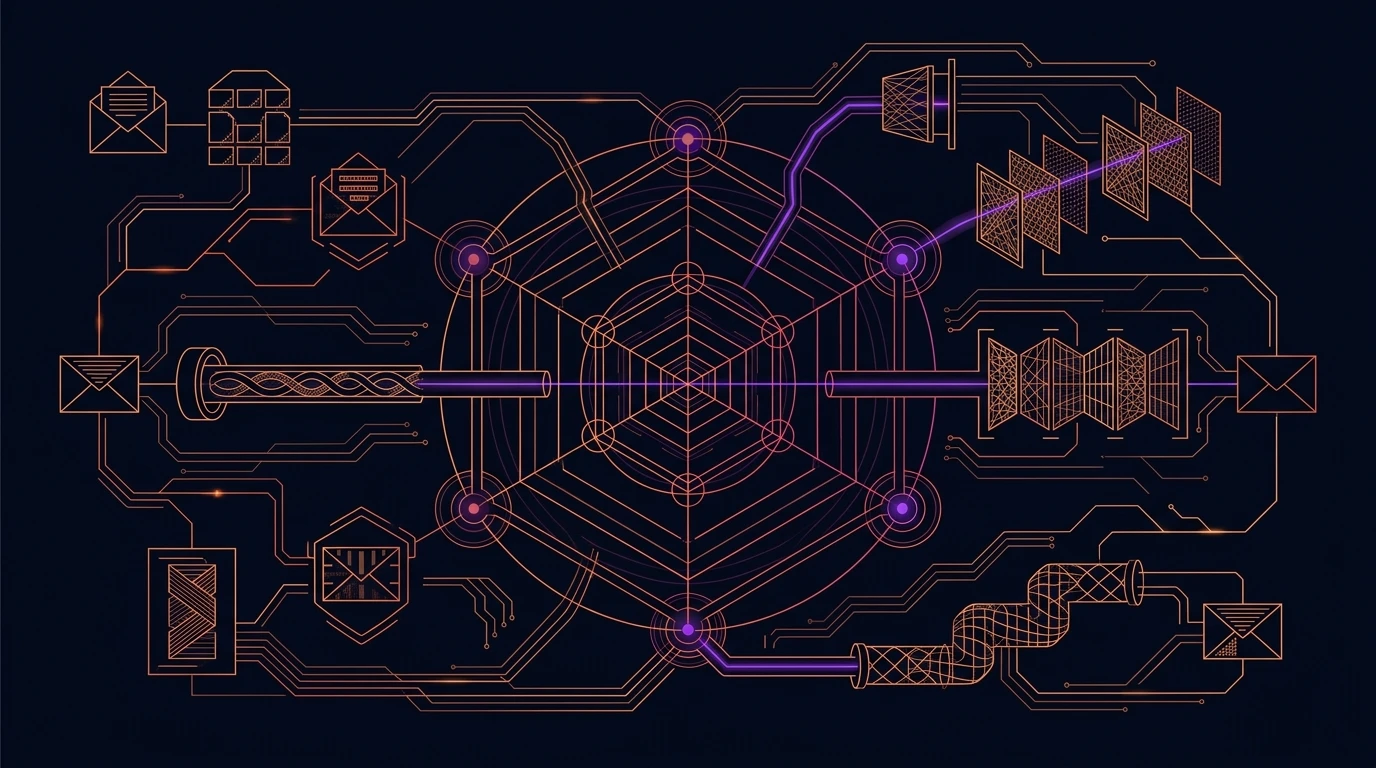
In mid-September 2026, Anthropic initiated the phased rollout of Enterprise Frontier Safeguards (EFS), an infrastructure-level telemetry framework engineered to resolve the structural impasse between enterprise Zero Data Retention (ZDR) mandates and model safety monitoring. Historically, enterprise procurement teams in banking, defense, and healthcare had to accept a non-negotiable compromise: either permit vendor-side log retention for trust and safety audits, or negotiate custom air-gapped contractual exceptions that disabled automated threat telemetry. Under EFS, Anthropic introduces a Bring Your Own Storage (BYOS) telemetry architecture, routing audit records and runtime evaluation logs directly into customer-controlled cloud storage buckets under customer-managed encryption keys (CMEK), while executing automated, zero-knowledge safety evaluations ephemerally in volatile model memory.
Key Takeaways
- Decoupled Telemetry Plane: Enterprise Frontier Safeguards routes all conversation activity and audit telemetry into tenant-owned cloud buckets (AWS S3, Google Cloud Storage, or Azure Blob Storage) using tenant KMS envelopes, guaranteeing zero vendor-side persistent state.
- Ephemeral Misuse Classifiers: Safety evaluations for high-consequence risk vectors (such as cyber-offensive tooling and CBRN threats) run in-memory within the inference harness without writing plain-text prompts or completions to disk or routing payloads to human review queues.
- Threat Surface Mitigation: The architecture directly responds to Anthropic’s September 2026 Threat Intelligence Report, which cataloged over 190 million illicit capability distillation exchanges and autonomous multi-agent malware adaptation vectors across frontier models.
- Multi-Cloud Parity: EFS is deployed natively across the Claude Platform API, Amazon Bedrock, Google Cloud Vertex AI, and Microsoft Foundry, providing uniform governance across heterogenous enterprise multi-cloud environments.
Architectural Analysis: Bring Your Own Storage (BYOS) Telemetry
The conventional enterprise inference pipeline forces customer payloads through vendor-managed logging proxies before reaching accelerator clusters. Even under Zero Data Retention (ZDR) agreements, anomalous traffic flagged by heuristic filters is frequently diverted into asynchronous triage queues, introducing compliance exposure under GDPR, HIPAA, and SOC 2 Type II trust criteria.
EFS restructures the execution boundary into three decoupled operational tiers: the Inference Runtime, the Ephemeral Safety Evaluator, and the Tenant-Bound Telemetry Sink.
+-------------------------------------------------------------------------------+
|                             ENTERPRISE TENANT BOUNDARY                        |
|                                                                               |
|  +------------------------+                 +-------------------------------+ |
|  | Enterprise Application |                 | Customer Storage Bucket (BYOS)| |
|  | & Agent Orchestrator   |                 | (AWS S3 / GCS / Azure Blob)   | |
|  +-----------+------------+                 +---------------+---------------+ |
|              | Mutual TLS                                   ^                 |
|              | CMEK Handshake                               | Encrypted Sink  |
+--------------|----------------------------------------------|-----------------+
               v                                              |
+-------------------------------------------------------------|-----------------+
|                        ANTHROPIC / HYPERSCALER RUNTIME       |                 |
|                                                             |                 |
|  +-----------+------------+      Volatile IPC   +-----------+---------------+ |
|  | Distributed Inference  | ------------------> | Ephemeral Safety Monitor  | |
|  | Engine (Claude 5/Opus) |                     | (Zero Disk Persistence)   | |
|  +------------------------+                     +---------------------------+ |
|                                                                               |
+-------------------------------------------------------------------------------+
The table below contrasts the operational characteristics of legacy enterprise ZDR against Anthropic EFS:
| Dimension | Legacy Enterprise ZDR | Anthropic EFS (BYOS) | Operational Impact |
|---|---|---|---|
| Log Storage Ownership | Vendor-owned ephemeral buffers (24h-30d) | Customer-owned Cloud Storage (S3/GCS/Blob) | Complete sovereign control over audit data |
| Encryption Envelope | Vendor-managed KMS with optional CMEK | Mandatory Tenant CMEK / Cloud KMS | Revocation instantly neutralizes all stored payloads |
| Abuse Monitoring | Asynchronous disk logging & sample review | Synchronous in-memory neural classification | Zero plain-text persistence on vendor infrastructure |
| Forensic Auditability | Blind trust in vendor compliance attestations | Direct SIEM ingestion (Splunk, Datadog, Sentinel) | Real-time security operations center (SOC) ingestion |
| Multi-Cloud Parity | Fragmented by hyperscaler portal | Standardized schema across Bedrock, Vertex, Foundry | Unified data engineering and compliance pipelines |
Threat Model & Automated Safety Runtimes
The technical necessity of EFS is underscored by findings published in Anthropic’s landmark 154-page Threat Intelligence Report: Detecting and Countering Misuse of AI. The investigation revealed two structural evolutions in adversarial exploitation:
- Autonomous Multi-Agent Mutation: Adversaries increasingly deploy multi-agent loops that recursively evaluate defensive telemetry, iteratively rewriting malware payloads and compiler flags until automated endpoint detection and response (EDR) heuristics are bypassed.
- Industrialized Capability Distillation: State-aligned research teams conducted distributed distillation campaigns exceeding 190 million exchanges, systematically harvesting specialized domain reasoning weights.
To counter these vectors without compromising enterprise confidentiality, EFS deploys streaming neural classifiers running in parallel with token generation. When an adversarial threshold is breached, the inference session terminates deterministically with a structured error code, and cryptographic forensic metadata is dispatched exclusively to the enterprise tenant’s configured storage sink. Anthropic telemetry systems receive only high-level anonymized policy counter signals, preserving zero-knowledge operational boundaries.
Enterprise Implementation Blueprint
Engineering teams provisioning Claude API or hyperscaler endpoints configure EFS through the governance manifest during client initialization. The following example demonstrates configuring an enterprise agent session bound to an AWS S3 BYOS audit bucket with KMS envelope encryption:
import { Anthropic } from "@anthropic-ai/sdk";

// Configure enterprise client with sovereign BYOS telemetry
const anthropic = new Anthropic({
  apiKey: process.env.ANTHROPIC_API_KEY,
  defaultHeaders: {
    "anthropic-version": "2026-09-01",
    "anthropic-beta": "enterprise-frontier-safeguards-2026-09-15",
  },
});

// Initialize session with sovereign BYOS audit telemetry and strict ZDR
const session = await anthropic.messages.create({
  model: "claude-3-7-sonnet-20250219",
  max_tokens: 4096,
  system: "You are an enterprise infrastructure security auditor operating under strict regulatory boundaries.",
  messages: [
    {
      role: "user",
      content: "Execute static structural compliance audit on Terraform state definitions.",
    },
  ],
  governance: {
    zeroDataRetention: true,
    frontierSafeguards: {
      mode: "byos_strict",
      telemetrySink: {
        provider: "aws_s3",
        bucketArn: "arn:aws:s3:::corp-ai-compliance-telemetry-us-east-1",
        kmsKeyArn: "arn:aws:kms:us-east-1:123456789012:key/byos-audit-cmk-01",
        retentionPolicyDays: 365,
      },
      auditForwarding: {
        siemFormat: "ocsf_json", // Open Cybersecurity Schema Framework
        anonymizeModelTokens: false, // Preserved internally within tenant boundary
      },
    },
  },
});
Under this configuration, model context adheres to Model Context Protocol (MCP) isolation standards, ensuring external tool calls and database queries remain bounded by tenant-side security posture.
Strategic Verdict for Enterprise Architects
Anthropic’s Enterprise Frontier Safeguards represents a fundamental maturation in enterprise frontier model operations. While OpenAI has pursued managed Private Safety Processing (PSP) to shield multi-turn agent sessions within proprietary sandboxes, Anthropic has prioritized data sovereignty by turning the storage tier inside out.
For Chief AI Officers, CISOs, and enterprise architects, EFS delivers three concrete advantages:
- Accelerated Compliance Sign-off: Legal and risk committees can verify that no customer payload resides outside tenant-controlled cloud boundaries, satisfying EU AI Act Article 9 risk management requirements and Article 50 transparency obligations.
- Direct SIEM Integration: Audit telemetry streams into enterprise security data lakes in real time via standard formats (OCSF JSON), enabling SOC teams to detect internal prompt compromise without custom ingestion scrapers.
- Hyperscaler Portability: Identical governance definitions function across Amazon Bedrock, Google Cloud Vertex AI, and direct Claude API endpoints, insulating enterprise architecture from single-vendor lock-in.
Engineering teams preparing for next-generation frontier deployments should review their existing cloud audit architectures and benchmark EFS BYOS latency alongside the evolving Anthropic Claude platform review hub and upcoming Claude Sonnet 5 enterprise evaluations.
Related Anthropic Lab Dossiers
// ANT-DOSSIER
Claude Sonnet 5: The Imminent Release That Could Shift the AI Landscape
Rumors suggest Anthropic's Claude Sonnet 5 is arriving imminently with Opus-level performance at half the cost. Here's what this means for enterprise AI.